Professional Certificate Program by IIT Roorkee
ESG & Sustainability Reporting
Commencement Date
November 2026
Program Fees
85,000* + GST
Duration
4 Months
Application Closure Date
Friday, 16/10/2026
Session Timing
Saturday - Sunday
This programme is officially listed on the IIT Roorkee website
Certificate Issued by : Continuing Education Centre, Indian Institute of Technology Roorkee



ABOUT THE PROGRAM
The ESG and Sustainability Reporting program is a comprehensive, industry-aligned course designed to equip professionals with the knowledge and practical skills required to understand, implement, and manage effective ESG reporting. The program provides a strong foundation in ESG concepts, sustainability drivers, and their growing importance in business strategy, investment decisions, and corporate valuation. Participants gain a clear understanding of how environmental, social, and governance performance influences risk management, regulatory compliance, and long-term value creation.
Covering all major global and Indian reporting frameworks—including GRI, SASB, TCFD, ISSB, ESRS, UN SDGs , and SEBI BRSR the program offers in-depth exposure to current regulatory requirements and evolving disclosure expectations. It emphasizes materiality assessment, stakeholder engagement, carbon accounting, climate risk analysis, social and governance metrics, and the structure of high-quality sustainability reports. Special focus is placed on GRI reporting, helping learners understand standards, disclosures, and alignment with other frameworks.
The program also explores future trends such as integrated reporting, digital and technology-enabled ESG disclosures, climate and nature-related financial reporting, and the convergence of global standards. By the end of the program, participants will be well-prepared to contribute to ESG strategy, reporting, compliance, and decision-making within organizations, consulting firms, financial institutions, and sustainability-focused roles.
- By completing this course , participants will be able to :
- Understand ESG fundamentals
- Identify key sustainability frameworks and standards
- Analyse ESG risks and opportunities
- Collect and evaluate ESG data
- Prepare sustainability and ESG reports
- Understand regulatory and compliance requirements
- Apply ESG reporting to decision-making
- Critically assess ESG disclosures
Explain the concepts of Environmental, Social, and Governance (ESG) and their importance to businesses, investors, and society.
Understand major reporting frameworks and standards such as GRI, SASB, TCFD, ISSB, and SDGs.
Assess how ESG factors impact organizational performance, risk management, and long-term value creation.
Learn methods for gathering, measuring, and validating ESG and sustainability-related data.
Develop the ability to structure and draft ESG or sustainability reports aligned with recognized standards.
Gain awareness of global and regional ESG reporting regulations and disclosure expectations.
Use ESG insights to support strategic planning, investment decisions, and stakeholder communication.
Evaluate the quality, credibility, and transparency of ESG and sustainability reports.
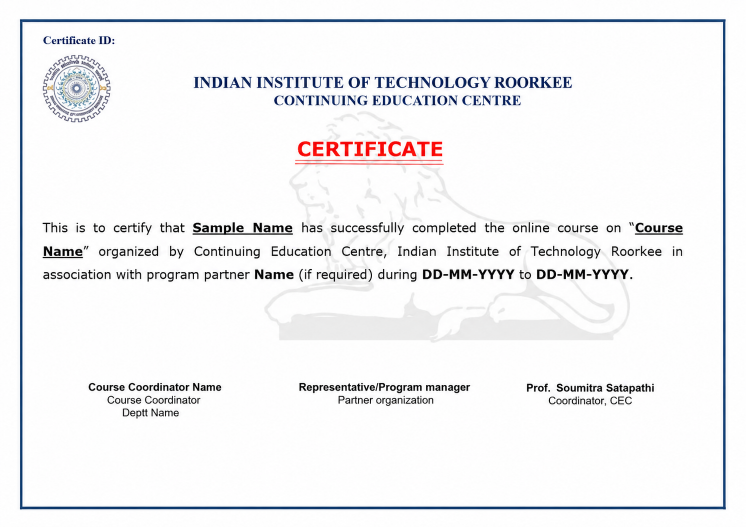
SAMPLE CERTIFICATE OF COMPLETION
Admission Process
 Submit Application Form
 Document Submission
 Eligibility Check
 Confirmation of Admission
 Payment of Course Fee
 Enrollment & Orientation
 Commencement of Classes
Submit Application Form
Why ESG Matters
ESG and Sustainability Reporting is becoming increasingly important for organizations, investors, and businesses. ESG factors influence how organizations approach business strategy, investment decisions, risk management, regulatory compliance, and long-term value creation.
Business Strategy
Understand the growing role of ESG and sustainability in business strategy and corporate value creation.
Investment Decisions
Learn how ESG performance and sustainability factors influence investment and capital market decisions.
Risk Management
Assess how environmental, social, and governance factors can impact organizational performance and long-term risks.
Regulatory Compliance
Gain awareness of evolving global and regional ESG reporting regulations and disclosure requirements.
Stakeholder Expectations
Understand the importance of stakeholder engagement and transparent sustainability disclosures.
Future of Reporting
Explore emerging trends including integrated reporting, technology-enabled ESG disclosures and climate-related financial reporting.
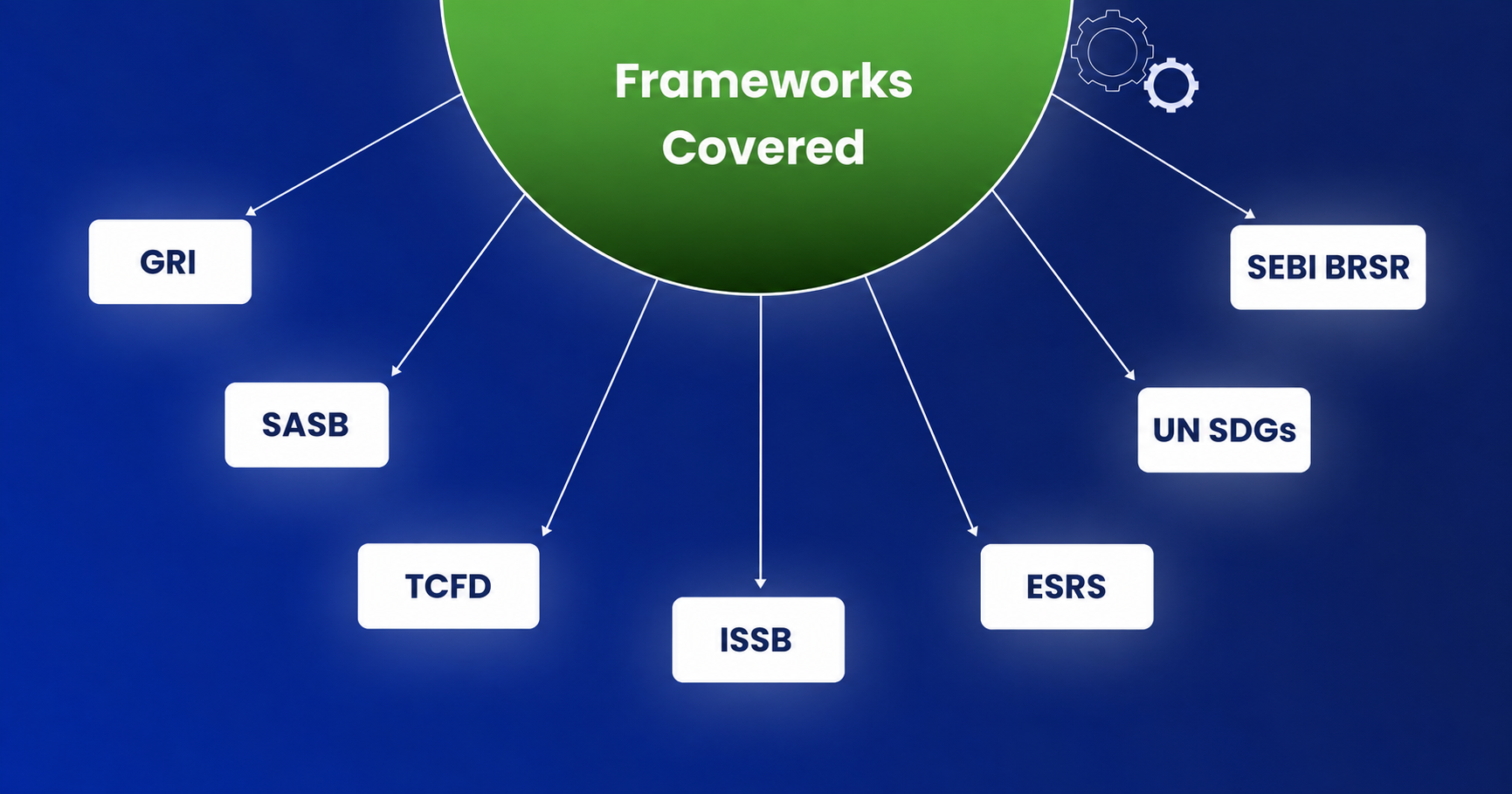
Frameworks Covered
The program covers major global and Indian sustainability reporting frameworks and standards.
GRI – Global Reporting Initiative
- Understand the evolution and history of GRI Standards.
- Explore the purpose and scope of GRI Standards in sustainability and corporate reporting.
- Learn about Universal Standards, General Disclosures, and topic-specific standards.
SASB
- Understand sustainability reporting concepts associated with SASB.
- Explore its role within the broader sustainability reporting landscape.
TCFD
- Understand climate-related financial disclosures.
- Explore climate-related risks and opportunities relevant to organizations.
ISSB
- Gain an understanding of International Sustainability Standards Board reporting requirements.
- Explore the role of sustainability-related disclosures.
ESRS
- Understand the European Sustainability Reporting Standards.
- Gain awareness of evolving global reporting expectations.
UN SDGs
- Explore the role of Sustainable Development Goals within sustainability and responsible business practices.
SEBI BRSR
- Understand India’s Business Responsibility and Sustainability Reporting requirements.
- Gain awareness of regulatory compliance and disclosure expectations.
Skills You’ll Develop
By completing this program, participants will be able to understand ESG principles, evaluate sustainability data, apply reporting frameworks, and use ESG insights to support strategic and business decision-making.
Understand ESG Fundamentals
Explain the concepts of Environmental, Social, and Governance (ESG) and their importance to businesses, investors, and society.
Identify Sustainability Frameworks & Standards
Understand major reporting frameworks and standards, including GRI, SASB, TCFD, ISSB, and SDGs.
Analyze ESG Risks & Opportunities
Assess how ESG factors impact organizational performance, risk management, and long-term value creation.
Collect & Evaluate ESG Data
Learn methods for gathering, measuring, and validating ESG and sustainability-related data.
Prepare Sustainability & ESG Reports
Develop the ability to structure and draft ESG or sustainability reports aligned with recognized standards.
Understand Regulatory & Compliance Requirements
Gain awareness of global and regional ESG reporting regulations and disclosure expectations.
Apply ESG Insights to Decision-Making
Use ESG insights to support strategic planning, investment decisions, and stakeholder communication.
Critically Assess ESG Disclosures
Evaluate the quality, credibility, and transparency of ESG and sustainability reports.
ESG Reporting Journey
The program provides an understanding of the key stages involved in ESG and sustainability reporting.
Understand ESG & Sustainability
Build a foundation in Environmental, Social, and Governance concepts, sustainability drivers, and their importance in business strategy.
Identify Material ESG Issues
Understand materiality assessment and the process of identifying sustainability topics based on organizational and stakeholder relevance.
Engage Stakeholders
Learn about key internal and external stakeholders, stakeholder engagement methods, and best practices.
Collect ESG Data
Understand methods for gathering, measuring, and validating ESG and sustainability-related information.
Analyze ESG Performance
Assess ESG risks and opportunities, including environmental, social, governance, and climate-related considerations.
Apply Reporting Frameworks
Understand how reporting frameworks and standards such as GRI and other recognized frameworks guide sustainability reporting.
Prepare ESG & Sustainability Reports
Learn about the structure of sustainability reports, including narrative and quantitative reporting and visual presentation of ESG information.
Understand Regulation & Compliance
Explore the regulatory landscape, including EU CSRD and SEBI BRSR, compliance deadlines, and disclosure requirements.
Review Future Trends
Explore integrated reporting, ESG integration with corporate strategy, climate and nature-related financial reporting, and technology-enabled ESG disclosures.
Who Should Attend
This program is designed for professionals and individuals interested in developing knowledge in ESG, sustainability, reporting, and related areas.
Accounting & Finance Professionals
Including accountants, auditors, and finance executives seeking to expand their knowledge of ESG reporting.
Corporate Managers & Executives
Professionals involved in strategy, risk management, compliance, or corporate governance.
Sustainability & CSR Professionals
Professionals responsible for sustainability initiatives, impact measurement, and reporting.
Risk, Compliance & Internal Audit Professionals
Individuals involved in managing regulatory and non-financial risk disclosures.
Consultants & Advisors
Professionals providing ESG, sustainability, or regulatory advisory services.
Investors & Investment Analysts
Individuals interested in responsible investing and ESG-driven decision-making.
Policy Makers & NGO Professionals
Professionals working in sustainability, development, or environmental governance roles.
Entrepreneurs & Business Owners
Business leaders looking to integrate sustainability and ESG principles into their business models.
Career Opportunities
Completing a course in ESG and Sustainability Reporting can support participants in exploring opportunities in ESG, sustainability, reporting, risk, compliance, and related fields.
ESG Analyst
Analyze environmental, social, and governance data to support investment and business decisions.
Sustainability Reporting Specialist
Prepare ESG, sustainability, or integrated reports aligned with global standards.
Corporate Sustainability Officer
Develop and implement sustainability strategies within organizations.
CSR Manager / Social Impact Officer
Manage corporate social responsibility initiatives and measure social impact.
Risk & Compliance Analyst
Assess ESG-related risks and support compliance with sustainability regulations.
Climate Risk & Environmental Analyst
Focus on environmental performance, climate risk disclosure, and carbon reporting.
Consultant – ESG & Sustainability
Advise organizations on ESG strategy, reporting, and regulatory readiness.
Investor Relations & Responsible Investment Roles
Support ESG disclosures for investors, asset managers, and financial institutions.
Audit & Assurance – ESG Focus
Work in areas related to ESG assurance and sustainability disclosures.
Policy & Development Sector Roles
Explore opportunities with NGOs, international organizations, and government agencies focused on sustainable development.