India's Leading Sustainable Professional Training Institute: What Actually Sets It Apart
Every institute claims to be "India's leading" name in sustainability training. Here's what that label should actually mean — and how to tell the real thing from the marketing.
Curriculum must track live regulation
Faculty should be practitioners
Projects beat passive video
Career support closes the loop
When you search for "Best Sustainability Institute in India," you will find about a dozen websites that claim to be the best, but most of them won't tell you why. It is this lack of clarity on their part that causes professionals to base their choices on how much money was spent on advertising or how good the landing page looks.
The reason why an institute can be called a leader is because of five distinct characteristics — no slogan. Here are those characteristics, and how eAsia Academy was designed around them.
01Curriculum that tracks live regulation
"Sustainability is dynamic." BRSR regulations, carbon trading systems, and HR regulations with AI change almost annually, if not quarterly. Three years after creating a course without changing anything in it would be learning history, not how to do something.
"If your course material hasn't changed since it was recorded, neither has your competitive edge."
The eAsia Academy recreates the module content based on the contemporary frameworks for ESG reporting, which include GRI, SASB, TCFD, and BRSR ; Article 6 frameworks and voluntary carbon standards for the carbon market pathway; and contemporary AI-HR toolkits for the analytics pathway.
02Faculty Who Work in the Field, Not Just Teach About It
An academic lecturing about the model off the slides and a professional who has experience creating disclosure reports, trading carbon credits, and using artificial intelligence HR analytics dashboards are two different things altogether. It is the latter who really helps students understand what it is like to do that particular job, beyond the textbooks and classroom discussions.
03Certification That Means Something to an Employer, Not Just a PDF
The value of the certificate depends on its ability to provide something useful. The employer doesn't need to know whether you completed the program but if you can make the required deliverable. This is why your certificate will get its credibility through your work on the projects: BRSR report, net zero roadmap, people analytics dashboard.
04A Format Built Around Your Job, Not Against It
For the most part, those who are contemplating obtaining a certificate on sustainability would not be doing so at the expense of their jobs. The appropriate training centre will recognize this and incorporate features such as flexible class hours, recordings in case one misses a session, and an understanding of time constraints.
05Hands-On Projects, Not Passive Video Playback
Real Deliverables
Build an actual disclosure, not just watch one explained.
Live Feedback
Instructor review on your work, not automated grading.
Applied Frameworks
Case studies pulled from real Indian and global companies.
Portfolio Output
A finished project you can actually show in an interview.
See the Difference for Yourself
Explore eAsia Academy's three flagship certificate programs — built around exactly these five markers.
06eAsia Academy Compares to Other Learning Options
Here’s how the five markers actually stack up across the three most common choices professionals compare before enrolling:
| What You Get | eAsia Academy | Traditional University Diploma | Free Online MOOC |
|---|---|---|---|
| Curriculum currency | Updated to current frameworks | Revised every few years | Often outdated, generic |
| Faculty background | Working practitioners | Mostly academic | Varies, rarely verified |
| Assessment style | Real project deliverables | Written exams | Auto-graded quizzes |
| Schedule flexibility | Live online, job-friendly | Fixed campus timing | Fully self-paced |
| Career support | Guidance + alumni network | Limited, campus-only | None |
| Typical duration | A few months, part-time | 1–2 years | Weeks, but low depth |
07The Three Programs That Define eAsia Academy
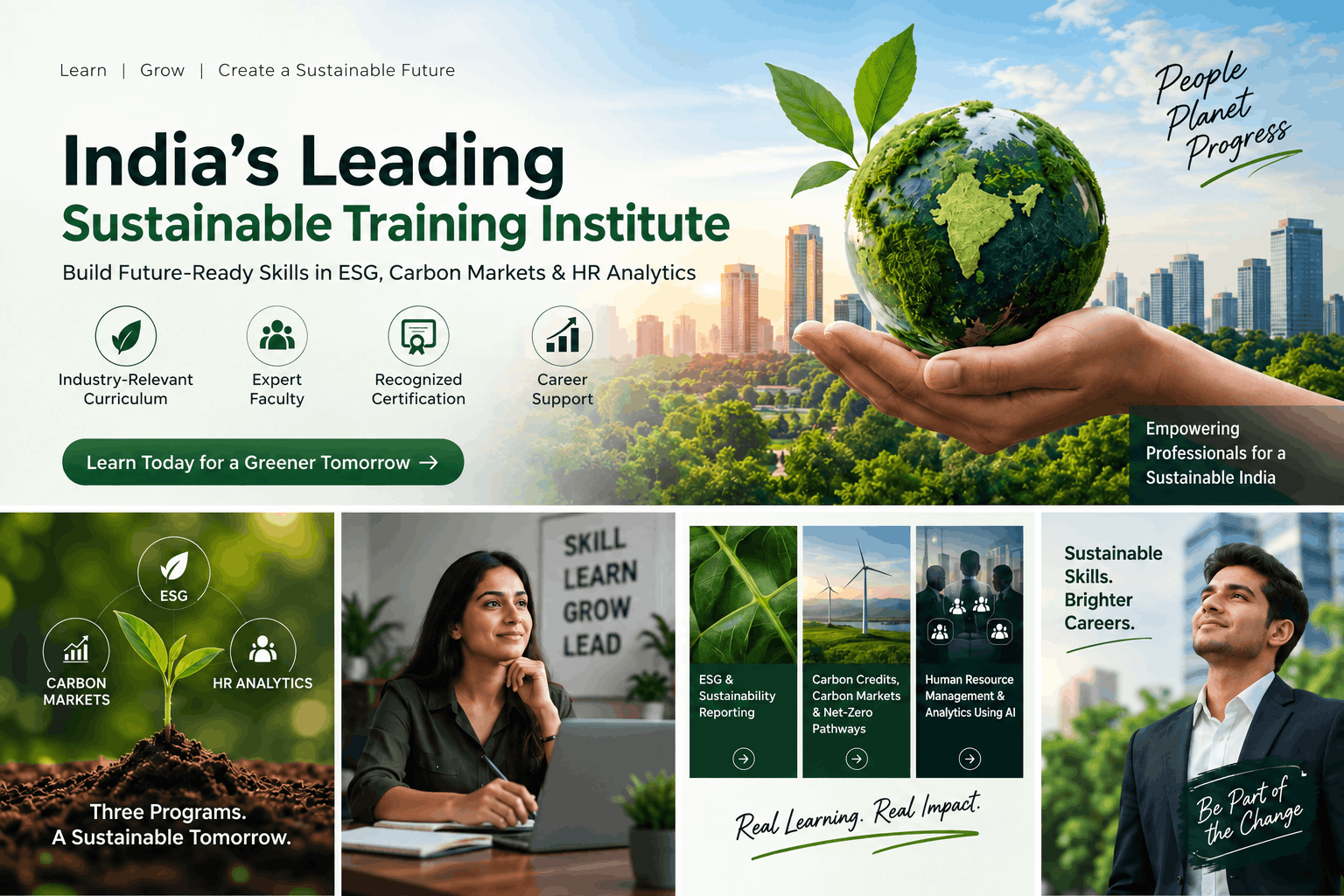
Professional Certification in ESG & Sustainability Reporting – For practitioners who need to develop and interpret practical ESG reporting through GRI, SASB, TCFD, and BRSR.
Advanced Certificate in Carbon Credits, Carbon Markets & Net-Zero Strategy – For those who are looking to enter the world of carbon strategy, carbon markets, or net-zero strategy due to the development of carbon market in India.
Professional Certificate in Human Resource Management & AI-based Analytics – For HR professionals who are seeking to incorporate AI-based analytics in their work of workforce planning and recruitment.
FAQs
An authentic leader will incorporate current industry curriculum, practicing faculty, certified training, interactive training sessions, and placement assistance – apart from offering numerous courses.
Certainly, all the courses offered by eAsia Academy are designed keeping working professionals in mind with scheduled live online sessions around the work schedule and weekend/evening batches.
Three popular courses related to sustainability offered by eAsia Academy include ESG and Sustainability Reporting, Carbon Credits, Carbon Markets and Net Zero Pathways, and HR Management and AI Analytics.
Yes, because the programs are grounded in practical industry frameworks and assessments based on projects, which is how employers assess them.
They all last a few months and are designed for part-time learners so that people can learn without stopping their work.
Yes, eAsia Academy does provide career counselling services, resume positioning, and an industry and alumni network of sustainability-oriented roles.
Many people choose one track initially and then pursue the second certification due to complementary nature of tracks.