How to Become an ESG Analyst in India: Career Guide, Skills, Salary & Scope
Environment, Social & Governance (ESG) has evolved to be a significant factor in today’s business operations. Businesses in various industries are paying more attention to such things as sustainability, responsible business conduct, compliance, climate risks, and reporting.
Such a trend has opened up new career possibilities for those interested in getting into the field of ESG, sustainability, ESG reporting, responsible investments, and climate.
The most lucrative career choice in this domain could be that of an ESG Analyst.
The ESG Analyst role is involved in assessing the performance of firms from the environmental, social, and governance points of view. For students, financial professionals, sustainability professionals, MBAs or working professionals wishing to enter the sustainability industry, the ESG Analyst profession is a good choice.
In this guide, we explain how to become an ESG Analyst in India, required skills, qualifications, job responsibilities, career scope, salary expectations, and how an ESG certification can help you get started.
What Is an ESG Analyst?
An ESG Analyst is an individual who assesses and analyses the performance of an organization in terms of environment, society, and governance.
Unlike conventional financial analysis, ESG analysis does not just focus on revenue and profitability but takes into account issues like:
- Carbon footprint
- Consumption of energy and water
- Waste management
- Treatment of employees
- Diversity and inclusivity
- Human rights
- Corporate governance
- Business ethics
- Board composition
- Risk management
- Sustainability reporting
ESG Analysts may be associated with firms, consulting firms, financial organizations, investment firms, rating agencies, research firms, and sustainability units.
The results of their analysis may prove helpful to organizations in many ways.
Role of an ESG Analyst
The role of an ESG analyst depends on the type of organization as well as industry. Nevertheless, some roles that fall under an ESG analyst include:
1. Gathering ESG Information
ESG Analysts gather ESG information from various sources.
Environmental information could be in relation to greenhouse gas emission, energy use, water use, and waste production.
Social information can consist of employee diversity, occupational safety, employee turnover, and community engagement.
Governance information could be in relation to board composition, business ethics, compliance, and corporate policies.
2. Analyzing the Company’s ESG Performance
After collecting the information, analysts assess the company’s ESG performance based on different models, standards, benchmarks, and industrial needs.
Analysts could compare the company’s ESG performance with the other companies or the average level of the whole industry.
3. Assisting ESG Reporting
In many cases, companies need to report their performance on the sustainability aspect.
ESG Analysts can assist in preparing sustainability/ESG reports.
Based on different organizations, this could include GRI, SASB, TCFD, ISSB frameworks, and Indian reporting standards.
4. Risk Identification
ESG risks might have a detrimental effect on the reputation, operations, financial performance, and future of the business.
An ESG Analyst can discover such risks as those associated with climate change, regulations, supply chain, employees’ activities, corporate governance, and environment.
5. Developing ESG Information and Reports
Analysts regularly transform the information into reports, presentations, dashboards, and advice for understanding by management and other parties.
Who Can Be an ESG Analyst?
One of the benefits of working in ESG is the absence of one specific education requirement.
Individuals with different specialties can switch their careers to ESG.
Relevant backgrounds may include:
- Environmental science
- Sustainability
- Finance
- Commerce
- Economics
- Business management
- Engineering
- Law
- Social sciences
- Data analytics
- Corporate reporting
For example, someone with a finance background may move into ESG investment analysis, while an environmental professional may focus more on climate and environmental performance.
The important factor is developing a combination of ESG knowledge, analytical ability, business understanding, and reporting skills.
Qualifications Needed in Education
Generally, a bachelor’s degree is helpful in beginning a career as an ESG Analyst.
Based on the position, employers might require degrees in:
- Business Administration
- Finance
- Economics
- Commerce
- Environmental Science
- Engineering
- Sustainability
- Accounting
- Social Sciences
For some jobs in consultancy, finance, and management, a master’s degree or an MBA could be advantageous, but that does not mean that everyone needs it for becoming an ESG Analyst.
Rather, it is important to have knowledge and skills in this area.
Skills Needed to be an ESG Analyst
If you intend to pursue a career in the field of ESG Analyst, having the below-listed skills will help you a lot in your career.
1. ESG Principles
One must have knowledge about the three principles of ESG as follows:
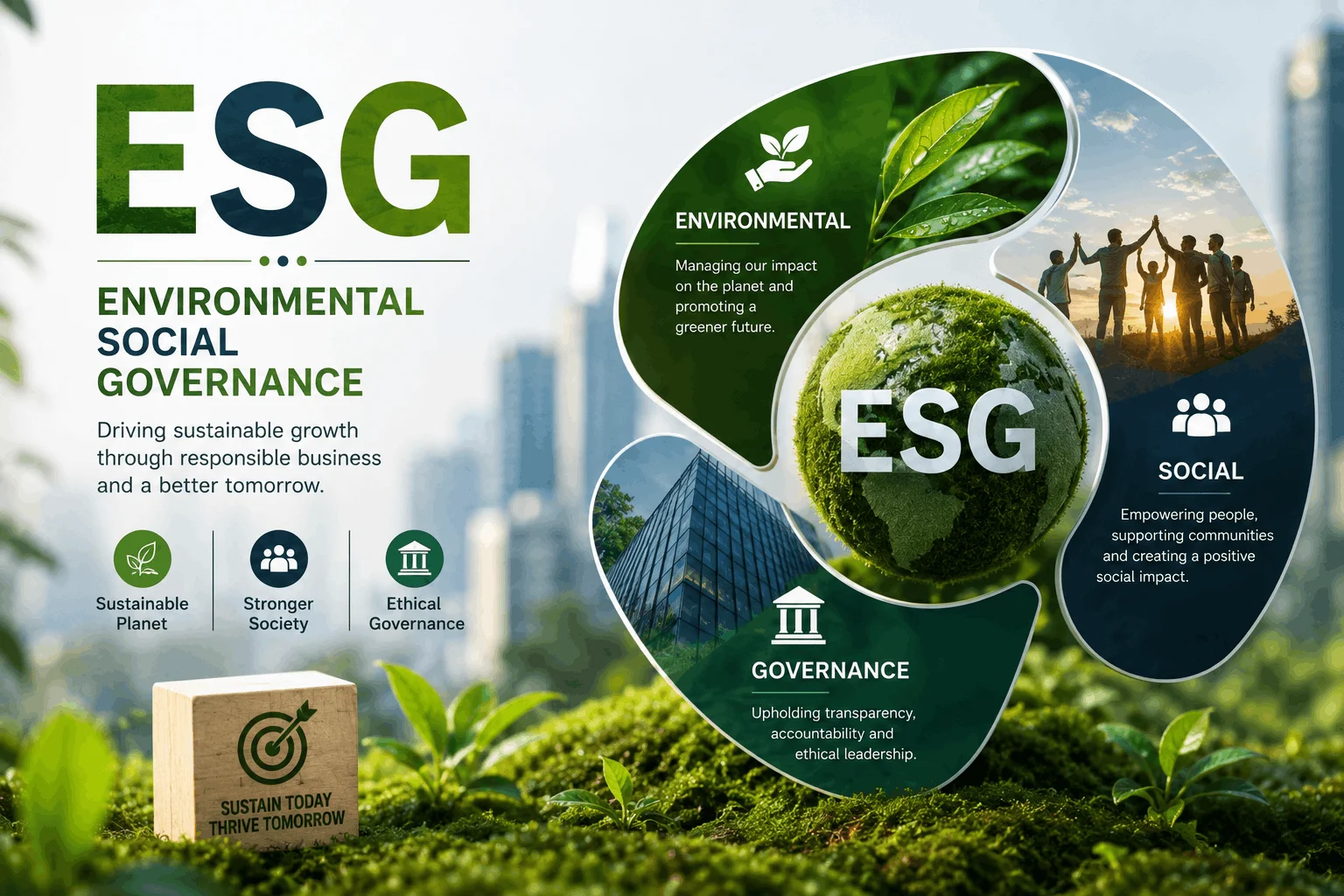
Environmental: Climate change, emission, energy, water, biodiversity, waste management, and resource management.
Social: Employees, human rights, health and safety, diversity, community, and supply chain.
Governance: Ethics, governance structure, transparency, compliance, shareholders' rights, and risk management.
2. ESG Reporting
Knowing about the way companies report their sustainability performance becomes very useful.
One should have knowledge about the different reporting frameworks and standards and the process of collection, measurement, and presentation of ESG information.
3. Data Analysis
A lot of data is used in ESG work.
Basic competence in Microsoft Excel, spreadsheets, data visualization, and dashboards is useful.
Knowledge of SQL, Power BI, Python, and other analytical tools could also be helpful for more advanced positions.
4. Research Skills
The ESG Analyst needs to conduct research on firms, sectors, regulations, sustainability programs, and emerging risks.
Research skills and ability to analyze information, thus, would be useful.
5. Financial Knowledge
ESG is increasingly linked to business performance and investments.
Financial knowledge, including revenue, profit, risk, value and investment analysis, would be helpful for ESG-related positions in finance.
6. Effective Communication
An analyst should be able to communicate complicated data effectively.
Effective communication skills will assist you in writing reports, making presentations, issuing recommendations, and communicating with stakeholders.
Step-by-Step: How to Become an ESG Analyst in India
Step 1: Study Basics of ESG
You need to first understand basics of ESG and how ESG impacts businesses.
Step 2: Understand ESG Reporting
Next, learn how organizations measure and report ESG performance.
Explore major ESG reporting frameworks and understand the fundamentals of sustainability disclosures.
Step 3: Develop Analytical Skills
Learn Excel and basic data analysis.
Practice working with ESG datasets and creating simple charts, tables, and dashboards.
Step 4: Gain Practical Experience
Theoretical knowledge is useful, but practical experience can make your profile stronger.
You can gain experience through:
- ESG internships
- Sustainability projects
- Research projects
- ESG reporting assignments
- Case studies
- Consulting projects
- Corporate sustainability initiatives
Even creating your own ESG analysis of a publicly listed company can become a useful portfolio project.
Step 5: Consider An ESG Certification
The ESG certification will give you an organized way of learning and will also show your interest in the topic and knowledge in front of the hiring managers.
A good certification program should include the following topics:
- ESG basics
- Sustainability
- ESG reporting
- ESG framework
- ESG data analysis
- Carbon management
- Corporate sustainability
- Real-life examples
For those already working, an ESG course will be a better way of entering this sphere.
Step 6: Create Your ESG Resume and LinkedIn Profile
Include relevant skills, projects, certifications, internships, and analytics you have done.
Do not just write "interested in ESG," but give an employer something specific you have done or learned.
Example:
"Performed ESG analysis of environmental performance of a listed company and analyzed its sustainability metrics."
Step 7: Apply for Entry-Level ESG Positions
Look for roles like:
- ESG Analyst
- ESG Analyst Junior
- ESG Research Analyst
- Sustainability Analyst
- ESG Reporting Analyst
- Sustainability Consultant
- ESG Data Analyst
- Climate Risk Analyst
- ESG Associate
Based on experience, you may move to senior analyst, consultant, manager, or even ESG specialist positions.
ESG Analyst Salary in India
The ESG salary varies based on experience, location, company, education, and specialization in India.
An entry-level ESG Analyst may have relatively modest income, whereas an experienced ESG Analyst, consultant, manager, and ESG specialist may have higher incomes.
In addition, professionals engaged in various fields like ESG Consulting, Investment Analysis, Climate Risk, Sustainability Strategy, and ESG Reporting have their own pay ranges.
Rather than choosing an ESG career only based on starting salary, consider its long-term potential. ESG is a multidisciplinary field, allowing professionals to move into consulting, finance, sustainability management, risk, reporting, and corporate strategy.
Career Scope for ESG Analysts in India
The ESG sector is expanding as companies, investors, regulators, and stakeholders pay greater attention to sustainability and responsible business practices.
ESG professionals can potentially work in:
- Consulting companies
- Banks and financial institutions
- Investment firms
- Corporate sustainability teams
- ESG rating organizations
- Research firms
- Accounting and professional services firms
- Manufacturing companies
- Technology companies
- Renewable energy organizations
Professionals can also specialize in areas such as ESG reporting, carbon management, climate risk, sustainable finance, ESG data, sustainability strategy, or responsible investment.
Why Choose an ESG Career?
An ESG career might be appealing to someone looking to blend business, sustainability, data analysis, and long-term benefits.
In addition, there is potential for individuals with various academic disciplines to join the ranks of the professionals in the field.
As the integration of sustainability practices and reporting in the business continues, the need for experts with skills in ESG may also continue to increase.
Kick Start your ESG Career with Relevant Skills
Being an ESG analyst is not about holding a specific degree. It is about a blend of ESG knowledge, analytical skills, reporting skills, business skills, and relevant experience.
If you are serious about entering this field, start by learning the fundamentals, understanding ESG reporting, developing analytical skills, completing practical projects, and considering a structured ESG certification program.
eAsia Academy offers ESG and sustainability learning opportunities designed to help learners build industry-relevant knowledge and prepare for emerging sustainability careers. Explore the program and take the next step toward building your career in ESG and sustainability.
FAQs
Degrees at Bachelor level from many fields, including finance, commerce, economics, business, environmental sciences, engineering and sustainability could be useful. Along with that, ESG knowledge, skills and experience are important.
Yes. It is a growing field where you can get employment in consultancy, finance, corporate sustainability, ESG reporting, research, risk management and investments.
Yes. ESG is multi-disciplinary in its nature. People who work in finance, commerce, management, engineering, economics, law and other fields can also choose ESG as their career.
Even though it is not a must for all types of jobs, it can be helpful in some ways to showcase your structured knowledge and strengthen your profile.
Some of the important skills are: ESG basics, data analysis, ESG reporting, research, finance, critical thinking, communication and sustainability frameworks.