What Are Carbon Credits? A Complete Beginner's Guide for India (2026)
Knowing the definition of a carbon credit happens to be precisely the beginning of the Advanced Certificate Program in Carbon Credits, Carbon Markets & Net-Zero Pathways by eAsia Academy, in association with IIT Roorkee
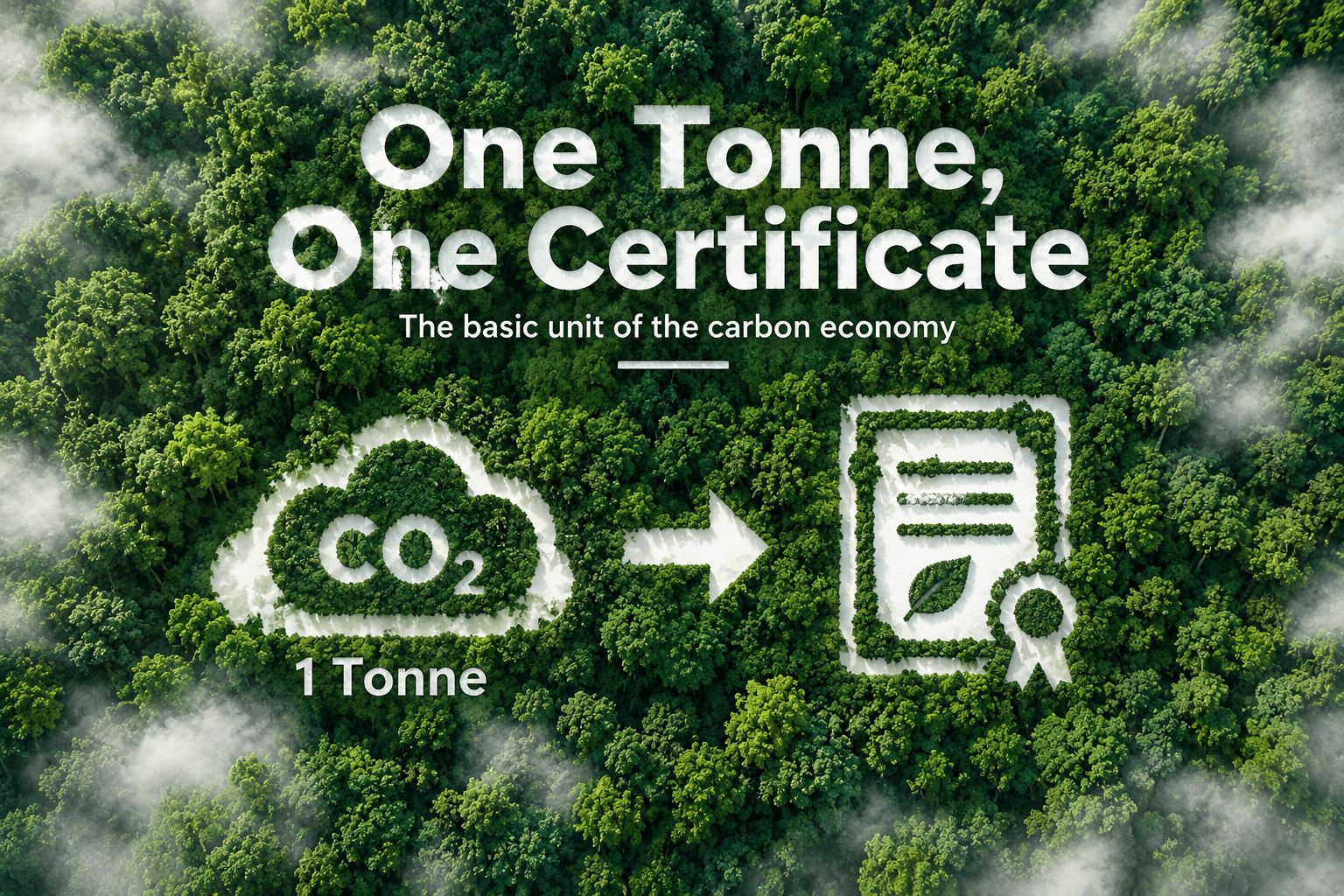
One carbon credit equals one ton of carbon dioxide saved/offset
The carbon credits should be authenticated before their issuance
India supplies and manages carbon credits
Understanding of this concept of basic unit leads to many career options
At some point within the past two years, "carbon credit" transformed from being a rare climate finance jargon to one of those things that are discussed in corporate meetings, on LinkedIn, and even on product labels. However, asking the average person to define a carbon credit will more than likely result in vague descriptions such as "something about trees," "means for firms to compensate for pollution," or "I don't fully understand it."
This disparity in the frequency with which the term is employed and the knowledge people have regarding what it means is precisely why a review of the basic concepts of a carbon credit is important. Irrespective of whether you are a student looking to explore green careers, a professional thinking about making a shift in your work, or anyone else trying to comprehend your organization's sustainability report, this primer explains the concept of a carbon credit and its genesis.
01What Exactly is a Carbon Credit?
A carbon credit is a certificate that indicates one tonne of carbon dioxide equivalent (tCO2e) which either does not enter the atmosphere at all or has been removed from the atmosphere. Essentially, this is evidence of an actual climate impact of a particular project, as opposed to a vague commitment to make one.
Upon issuance, the credit becomes a unique serial number recorded in a registry. It may be stored, bought and sold, traded, or retired – permanently used to underpin an emissions claim and thus ceasing to circulate any more. And this is precisely how double-counting of the same tonne of CO2 by two parties is prevented.
02How Is a Carbon Credit Generated?
A carbon credit starts with a project. These can range from a wind farm which replaces coal-fired energy generation to mangroves planted for sequestration of carbon in soil and biomass, a biogas plant which captures the methane gas from waste or switching an industry process to reduce the emissions intensity.
The project developer calculates precisely how much CO2 is avoided or sequestered by the project compared to the baseline scenario. The baseline scenario is defined as the scenario where no such project was implemented. This is done in accordance with an accepted standard, after which credits are generated based on the results.
- Baseline – What would the emissions scenario look like without the project?
- Additionality – Proof that the emission reduction would not have occurred without the project.
- Monitoring – Regular monitoring of the actual output of the project.
- Issuance – Credits are generated once the monitoring is verified.
03Who Issues and Verifies Carbon Credits?
Credits aren't self-certified — they're issued under the rules of a specific standard, and checked by accredited, independent verification bodies before approval. Here are the major standards active in and around India today:
| Standard | Managed By | Primary Focus |
|---|---|---|
| VCS (Verra) | Verra | Broadest global voluntary market standard |
| Gold Standard | Gold Standard Foundation | Strong sustainable development co-benefits |
| CCTS | Bureau of Energy Efficiency, India | India's domestic compliance market |
| Puro earth | Puro earth | Engineered carbon removal credits |
"A carbon credit is only as trustworthy as the verification behind it — the certificate is the easy part, the checking is where the real work happens."
Advanced Certificate Program in Carbon Credits, Carbon Markets & Net-Zero Pathways | IIT Roorkee-backed
Build practical knowledge of carbon credits, carbon markets and net-zero pathways with eAsia Academy's advanced certificate program.
04Who Purchases Carbon Credits and Why?
The purchasers tend to fall under one of two categories. First, there are those who need to purchase carbon credits due to being under a compliance mechanism such as the CCTS, as a way to cover the difference between their emissions and target emissions. Then there are those who buy carbon credits voluntarily, as a way of supporting their company’s sustainability policy, their goal of being net-zero, or their climate statement on a particular product.
Essentially, the rationale behind the purchase of the credit is identical in both cases; it allows an individual to balance the carbon emitted via payment for an offset or removal of an equivalent amount.
05Where Does India Stand?
India has been among the largest providers of carbon credits for a long time due to a solid portfolio of renewable energy, forestry and cook stove projects that have been certified through international voluntary programs. India is also becoming a regulator in terms of emission intensity requirements for industries that are energy intensive with the help of the Carbon Credit Trading Scheme (CCTS).
This dual role as both a provider and a regulator is exactly the reason why there is a demand for people who have knowledge about carbon credits on both levels.
06The Career Opportunity Behind Carbon Credits
Once you understand how a credit is created, verified, and used, a whole set of career paths starts to make sense:
MRV Analyst
Verifies project emission-reduction claims
Carbon Trader
Buys and sells credits in active markets
Project Developer
Structures new offset and removal projects
ESG Consultant
Advises companies on net-zero strategy
07Make Your Career in Carbon Markets with eAsia Academy
Knowing the definition of a carbon credit happens to be precisely the beginning of the Advanced Certificate Program in Carbon Credits, Carbon Markets & Net-Zero Pathways by eAsia Academy, in association with IIT Roorkee. The program is structured on these basic principles using the MRV methodology, market structure, and the changing compliance requirements of India.
If disclosure and reporting interest you more than trading and verification, explore our ESG & Sustainability Reporting program, or if you're curious how AI is reshaping adjacent people functions, take a look at our HR Management & Analytics using AI program. That's eAsia — committed for a green future, one well-informed professional at a time.
FAQs
It refers to a certificate for one tonne of carbon dioxide equivalent either reduced, avoided or removed by some specific project that may be purchased, traded or retired.
An individual designs a project, registers it according to some standard and then gets credited when the effects of reducing/removal of emission are verified independently.
Verification organizations that have their accreditation verify projects based on certain standards like Verra, Gold Standard and CCTS in India.
It includes companies with net-zero targets, industrial sectors bound by some scheme including CCTS and even individuals for offsetting certain activities.
When a carbon credit is retired then it means that the same can never be resold in future.
Yes, India is both a significant provider through renewable energy and forest carbon credits, as well as a regulator of the industry through the CCTS.
An IIT Roorkee certified program like the Advanced Certificate Program provided by eAsia Academy will prepare one for the job in just a matter of months.