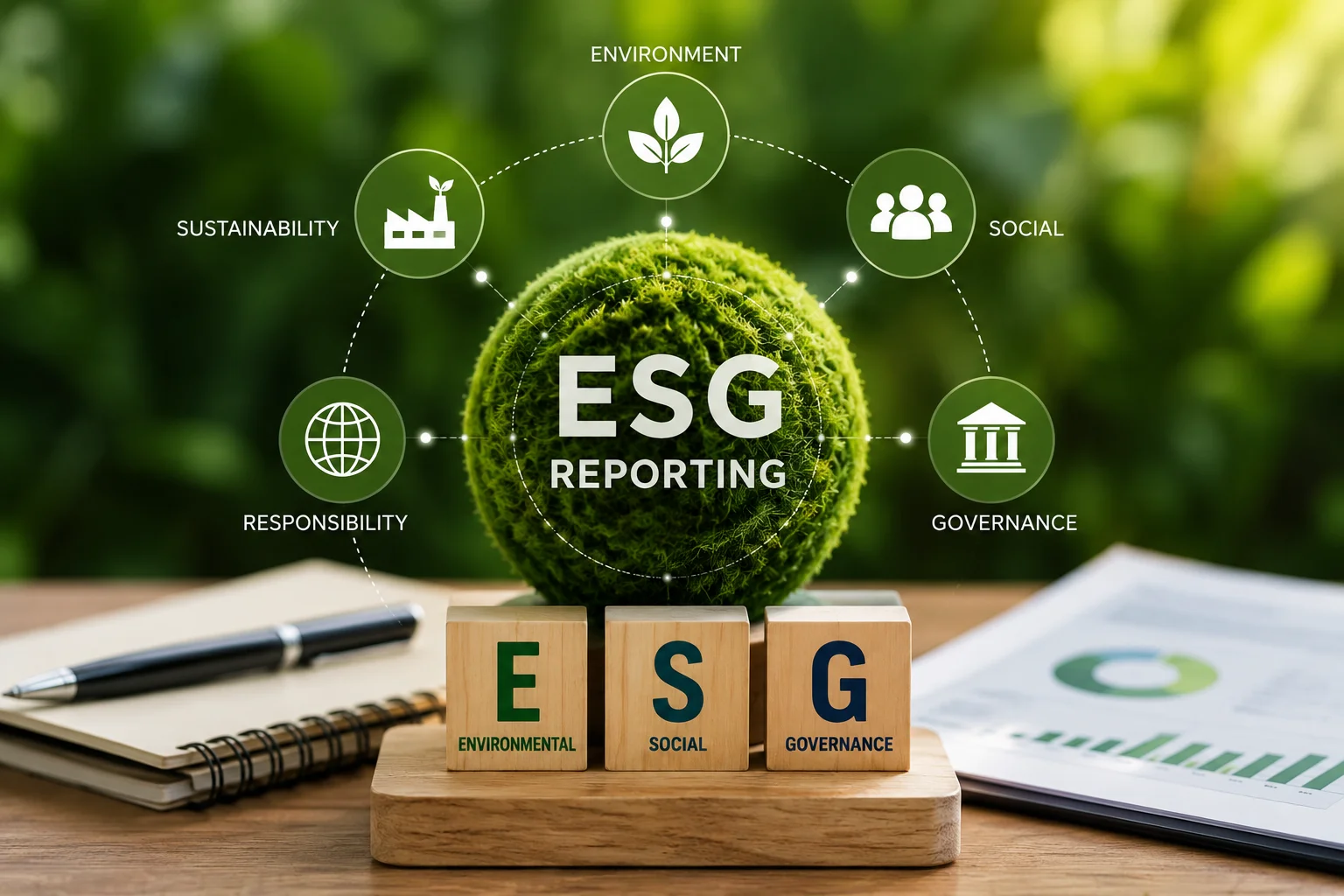
What Is ESG Reporting? A Beginner’s Comprehensive Guide
Introduction
The practice of Environmental, Social, and Governance (ESG) reporting has emerged as one of the fastest growing business practices across the globe. It has become mandatory for businesses to work responsibly while also being transparent regarding their environmental and social impact.
Whether you’re a student researching career options, a professional upgrading your skill set, or a business owner who wants to learn about sustainability practices, knowledge about ESG reporting has become indispensable in the current scenario of business operations.
This guide will help you learn all about ESG reporting.
What is ESG Reporting?
ESG reporting is the way in which firms report on their performance concerning Environmental, Social, and Governance.
Rather than just financial performance, firms now also report on:
Environmental
- Carbon emissions
- Energy use
- Water management
- Waste reduction
- Renewable energy use
Social
- Employee well-being
- Diversity and Inclusion
- Workplace safety
- Human Rights
- Community engagement
Governance
- Board Composition
- Ethics and Compliance
- Risk Management
- Anti-Corruption
- Data Protection
These reports help investors, regulators, customers, and stakeholders evaluate how responsibly a company operates.
Why Is ESG Reporting So Important?
The modern investor cares not only about earnings but also about the way companies handle environmental and social risks.
Companies that have robust ESG policies usually benefit from:
- Greater investor confidence
- Better corporate image
- Better risk management
- Smooth regulatory compliance
- Customer trust
- Sustainable growth
Now, with the growing number of global ESG regulations, ESG reporting is turning into a business necessity.
ESG Reporting Frameworks You Should Know
Several international and national frameworks help companies prepare ESG reports.
1. GRI (Global Reporting Initiative)
One of the world's most widely used sustainability reporting standards.
Best for:
- Sustainability disclosures
- Corporate transparency
- Stakeholder communication
2. BRSR (Business Responsibility and Sustainability Report)
Introduced by SEBI for listed Indian companies.
Focus Areas:
- ESG disclosures
- Business responsibility
- Sustainability performance
3. ISSB Standards
The International Sustainability Standards Board develops globally consistent sustainability disclosure standards that help investors compare companies.
Who Should Learn ESG Reporting?
ESG Reporting is valuable for:
- MBA Students
- Commerce Graduates
- Engineers
- HR Professionals
- Finance Professionals
- Sustainability Consultants
- CSR Professionals
- Environmental Professionals
- Corporate Executives
Even fresh graduates can build careers in ESG because organizations increasingly seek professionals with sustainability knowledge.
ESG Careers
The need for ESG professionals is increasing day by day.
Job titles in high demand are:
- ESG Analyst
- Sustainability Consultant
- ESG Reporting Professional
- ESG Data Analyst
- ESG Specialist
- Carbon Accounting Analyst
- Climate Risk Analyst
- Compliance Officer
Many companies in manufacturing, banking, consulting, IT, healthcare, energy, and FMCG industries have been making huge investments in ESG.
Skills Needed for ESG Reporting
If you are to be an ESG expert, it is recommended that you get the following skills:
- Concepts of sustainability
- ESG frameworks
- Data analysis
- Carbon accounting
- Climate risk assessment
- Corporate governance
- Writing reports
- Excel and business analytics
- AI for sustainability reporting
Getting these skills through certifications increases employability.
Steps to Getting Started With ESG Reporting
These are the basic steps for beginners to start their journey with ESG reporting:
- ESG Basics
- Sustainability reporting guidelines
- BRSR & GRI standards
- Reading ESG reports of top firms
- Carbon accounting basics
- Emergence of new analytical & reporting skills
- Completion of ESG certificate program
- Case studies practice
The process of learning is constant as ESG reporting regulations keep on changing.
Conclusion
ESG Reporting is going to influence the future of responsible business. Not only should organizations prove their financial strength but they must also show their commitment towards sustainability, ethical governance, and corporate social responsibility
As a student or professional, there are many career opportunities in the field of ESG reporting for you. Developing skills in ESG reporting will allow you to compete in the coming job market.
FAQs
ESG Reporting refers to the disclosure of the company's performance related to Environmental, Social, and Governance issues.
SEBI has made the Business Responsibility and Sustainability Reporting (BRSR) compulsory for various large listed companies.
The people who have interest in the subject like students, graduates, HR professionals, finance professionals, engineers, consultants, and sustainability enthusiasts can make their career in this field.
The sectors like banking, manufacturing, IT, consulting, energy, healthcare, FMCG, logistics, and infrastructure hire ESG professionals.
The knowledge about the frameworks of ESG, principles of sustainability, carbon accounting, reporting, analysis, and governance skills are important in this area.