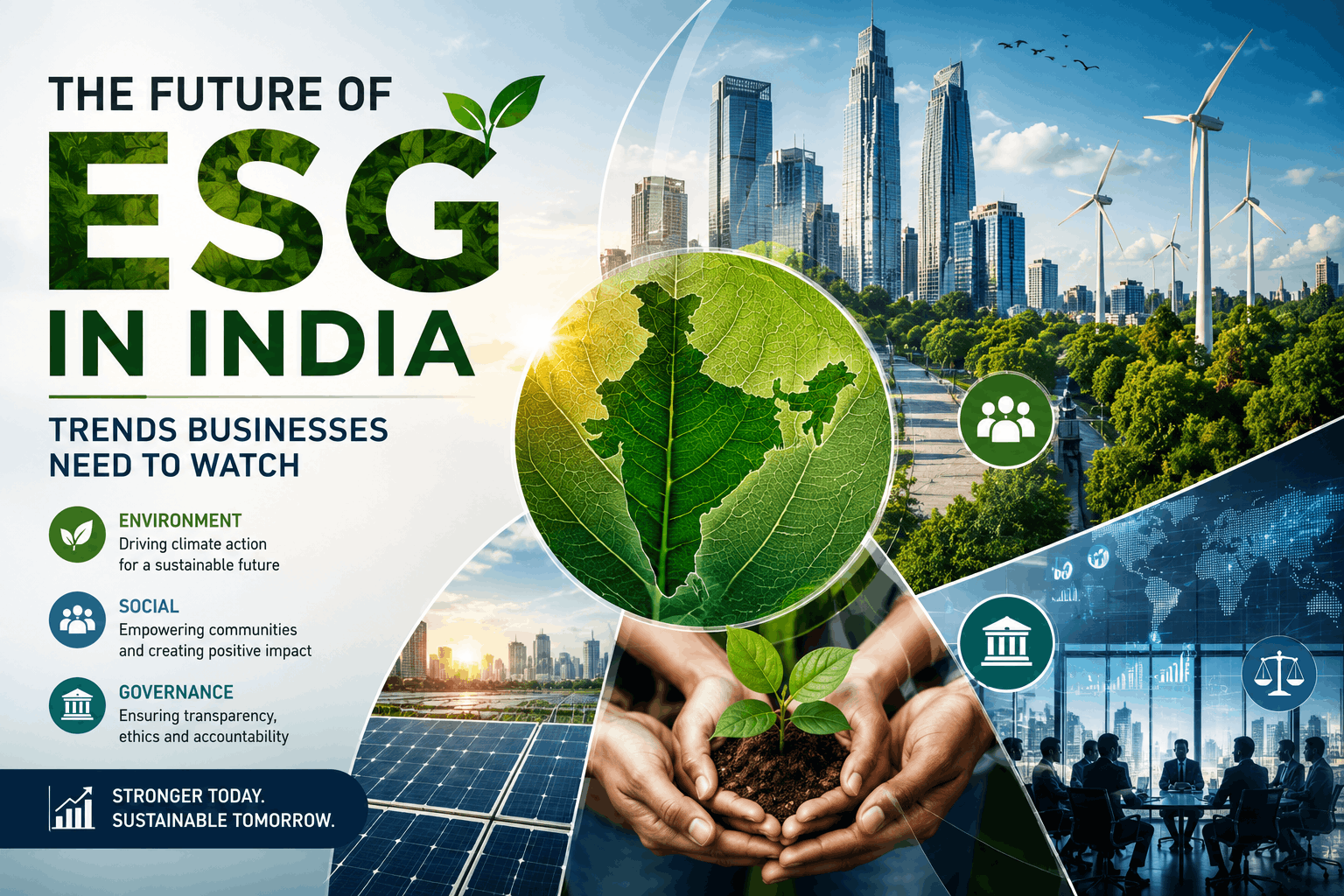
The Future of ESG in India: Trends Businesses Need to Watch
The influence of Environmental, Social and Governance (ESG) on the functioning of business houses is increasing significantly not only in terms of growth but also for creation of long-term value. In India, the concept of ESG is going beyond just being seen as an initiative related to corporate social responsibility. Investors, regulation authorities, customers, employees, business partners etc. are becoming increasingly concerned about how companies handle environmental, social and governance aspects.
What shall shape the prospects of ESG in India could be stronger reporting requirements, climate actions, sustainable financing and technology-driven data management processes as well as increasing awareness of stakeholders. Companies having an idea of such developments will better cope with the future challenges.
For companies, specialists and students who want to explore the emerging area of ESG, its awareness is one of the most important elements of the business world today.
1. ESG Reporting Will Gain Importance
One of the key trends that will shape the future of ESG is the increasing emphasis on transparency and disclosure. The business world has become more aware that it must measure and communicate its performance in relation to the environment, society, and governance.
In India, initiatives like the Business Responsibility and Sustainability Reporting (BRSR) guidelines have increased the importance of formal sustainability reporting. As a result, companies have started to pay more attention to the process of gathering relevant ESG data and creating more robust internal reporting platforms.
In the coming years, companies will need to enhance their process of measuring various aspects:
- GHG emissions
- Energy usage
- Water consumption
- Waste management
- Diversity among employees
- Health and safety in the workplace
- Supply chain activity
- Boardroom leadership
- Ethics and compliance
The quality of ESG reporting matters, and in this respect, it is necessary to pay more attention to the accuracy of information, quality of processes and responsibility.
2. Climate Action Will Become Important for Businesses
The issue of climate change brings negative financial, operational and supply chain effects to companies and industries. Problems with severe weather, availability of resources and changing climate policies may lead to challenges in daily operations and long-term planning for many companies.
As a result of this negative impact, climate action is likely to remain a hot topic in the field of ESG trends in India.
Companies may start focusing on:
- Reducing emissions
- Improving energy efficiency
- Using renewable energy
- Measuring risks connected with climate changes
- Set sustainability goals
- Offering low carbon products and services
- Forming climate-protected unified supply chain
For many companies, sustainability is becoming part of their business strategy. Environmental challenges and risks can influence expenses, operations, investments and reputation.
3. More Focus Will Be Given to Sustainable Supply Chains
ESG performance of a business depends not only on what happens in its own offices or factories, but also how its suppliers, contractors and other business partners affect the environment and society.
This shows how popular sustainable supply chain management is becoming now.
The following questions may need answers:
- Do suppliers operate under ethical employees’ rights conditions?
- How eco-friendly are raw materials?
- Do suppliers keep track of emissions and resource consumption?
- Does the supply chain offer transparency?
- Does the supply chain practice respect for human and labor rights?
Increased pressure from big companies for improvement in sustainable practices will concern small suppliers as well.
Many business opportunities in the field of ESG consulting and sustainability technologies may appear.
4. ESG Data and Technology Will Shape Decision-Making
Successful ESG management relies heavily on data. Manual spreadsheets may be challenging to use when organizations need to collect information from numerous locations, departments, and supply chains.
Therefore, as India moves towards a more robust ESG future, technology will have a key role.
Companies are increasingly taking advantage of digitalization in
- ESG data generation
- Carbon accounting
- GHG emissions control
- Energy management efforts
- Sustainability reporting
- Risk evaluation
- Supply chain oversight
- Performance management
Robots, AI tools, and data analysis programs can help organizations unveil patterns and improve decision-making.
However, it is important to note that technology alone is not sufficient. Businesses need personnel that understand ESG principles and can analyze the information.
5. Green Finance and Sustainable Investment Will Grow
Investors are becoming increasingly aware of the ways in which companies deal with long-term risks related to the environment, society, and governance.
This drives interest in the following new areas:
- Green bonds
- Sustainable finance
- Climate finance
- Responsible investing
- Renewable energy investments
- ESG-oriented strategies
Leading companies tend to improve their ability to prove how they handle their long-term risks and opportunities.
For Indian companies, ESG performance is guaranteed to become important in building the companies’ reputation and negotiating with investors and banks.
Therefore, a good ESG strategy should create a link between sustainability objectives and the business results obtained.
6. Social Factors Will Have An Increased Significance
While environmental topics are given priority, the significance of social aspect of ESG should not be overlooked.
Businesses need to realize their impact on the workforce, society, customers and other stakeholders.
The concept covering the following issues, among others:
- Wellbeing of employees
- Diversity and inclusivity
- Safety at work
- Development of skills
- Fair employment practices
- Human rights
- Community involvement
- Privacy and protection of customers
The workforce of India is considerably growing and therefore these matters become crucial.
Companies that pay attention to their workforce and have responsible working practices can create confidence, and foster resilience in the organization.
7. Governance Remains Central to ESG
Good governance contributes to good performance in both environmental and social aspects. Successful implementation of ESG goals should include proper leadership, transparency and accountability.
Companies need to have systems in place for:
- Oversight
- Management of risk
- Making ethical decisions
- Compliance with regulations
- Prevention of corruption
- Disclosure of relevant information
- Accountability to stakeholders
With increased incorporation of ESG into mainstream business strategy, the role of governance in encouraging understanding of sustainability-related risks and opportunities will become even more important.
8. Carbon Management and Net-zero Are Set to Generate New Opportunities
The transition towards a low-carbon economy in India is likely to fuel the growing interest in carbon management, and renewable energy and sustainability solutions.
Companies might engage more in:
- Measuring carbon footprints
- Reducing emissions related to Scope
- Enhancing operational efficiency
- Creating strategies for decarbonization
- Investigating renewable energy
- Incorporating knowledge of the carbon market
- Setting long-term climate objectives
The transition can also open up career and business possibilities in sustainability, ESG, carbon management, and climate finance.
Those who possess knowledge of both sustainability concepts and business practices will likely prove highly useful in this emerging field.
9. The Relevance of ESG Competencies Will Rise
Besides its significance for business organizations, the future of ESG opens new doors for experts looking for employment.
Specifically, organizations might start requiring the following competencies:
- ESG analysis
- Sustainability reporting
- Carbon counting
- Climate risk
- ESG managing of information
- Sustainable finance
- Corporate governance
- Supply chain sustainability
- Environmental management
After ESG becomes an integral part of business processes, the need for necessary competencies will arise in various areas, such as finance, HR, operations, consulting, risk management, and sustainability.
At eAsia Academy, our students can check out various programs concerning ESG, sustainability, and adjustments of the requirements of modern business.
How can companies prepare for the future of ESG?
Companies don’t need to address every ESG problem at once. An effective method to start is by analyzing the major risks and opportunities the company faces.
1. Evaluate the present situation.
Establish the common ESG practices in the industry and find out gaps in them.
2. Determine material ESG issues.
Concentrate on ESG problems that are most important for businesses, industries, and stakeholders.
3. Create reliable data systems.
Set up the procedures for collecting, monitoring, and providing the information on ESG.
4. Set the goals.
Outline realistic targets concerning sustainability and ESG and monitor the progress.
5. Involve the management in the process.
ESG issues should be monitored by top management and governance structures.
6. Educate employees.
Make sure that the importance of ESG is understood by the workers.
7. Keep monitoring developments.
ESG regulations, reporting requirements, and market practices change all the time, therefore firms should reconsider their strategy on a regular basis.
Conclusion
The future of ESG in India is expected to be more focused on transparency, climate action, responsible supply chains, technology, sustainable finance and strong governance.
For organizations, ESG should not be considered as a one-off reporting exercise; rather, it is becoming more and more linked to risk management, stakeholder trust, operational resilience and value in the long run.
Companies that begin developing strong ESG skills now will be better equipped to respond to future demands. Meanwhile, the demand for sustainable business services creates new opportunities for people who want to gain knowledge related to ESG.
FAQs
The future of ESG in India is anticipated to encompass enhanced sustainability reporting, improved climate action, focus on governance, sustainable finance, use of ESG technology, and responsible supply chains.
The need for ESG is increasing as investors, regulators, customers, and stakeholders require companies to handle environmental, social, and governance challenges with accountability.
Some of the popular trends are enhanced ESG reporting, climate risk management, renewable energy, carbon management, responsible supply chains, and the use of ESG data technology.
BRSR stands for Business Responsibility and Sustainability Reporting. It is a framework used for sustainability reporting amongst eligible listed companies in India.
ESG management opens up several career opportunities for professionals looking to work in sustainability, climate risk, reporting, finance, governance, carbon management, and responsible business activities.