Is it Worth Getting Certified in ESG for Professional Growth? A Comprehensive Guide
The significance of Environmental, Social, and Governance (ESG) in professional and business advancements continues to expand. As businesses experience growing pressure from shareholders, governments, customers, and employees to conduct their business responsibly, the need for experts who comprehend sustainability and ESG principles rises.
One of the most common inquiries that students and professionals are asking these days is whether obtaining ESG credentials is worthwhile for career advancement.
Whether or not ESG certification is worthwhile for career growth relies on a lot of factors such as one’s individual objectives, level of experience, quality of the certification program, and the way the acquired knowledge is used. However, an ESG certification might be quite beneficial for anyone who wishes to pursue a career in such areas as sustainability, responsible business, ESG reporting, climate change, risk management, finance, consulting, or corporate strategy.
In this guide, we are going to review the advantages of obtaining ESG credentials, job prospects it opens up for professionals, and ways to obtain ESG knowledge through a program at eAsia Academy.
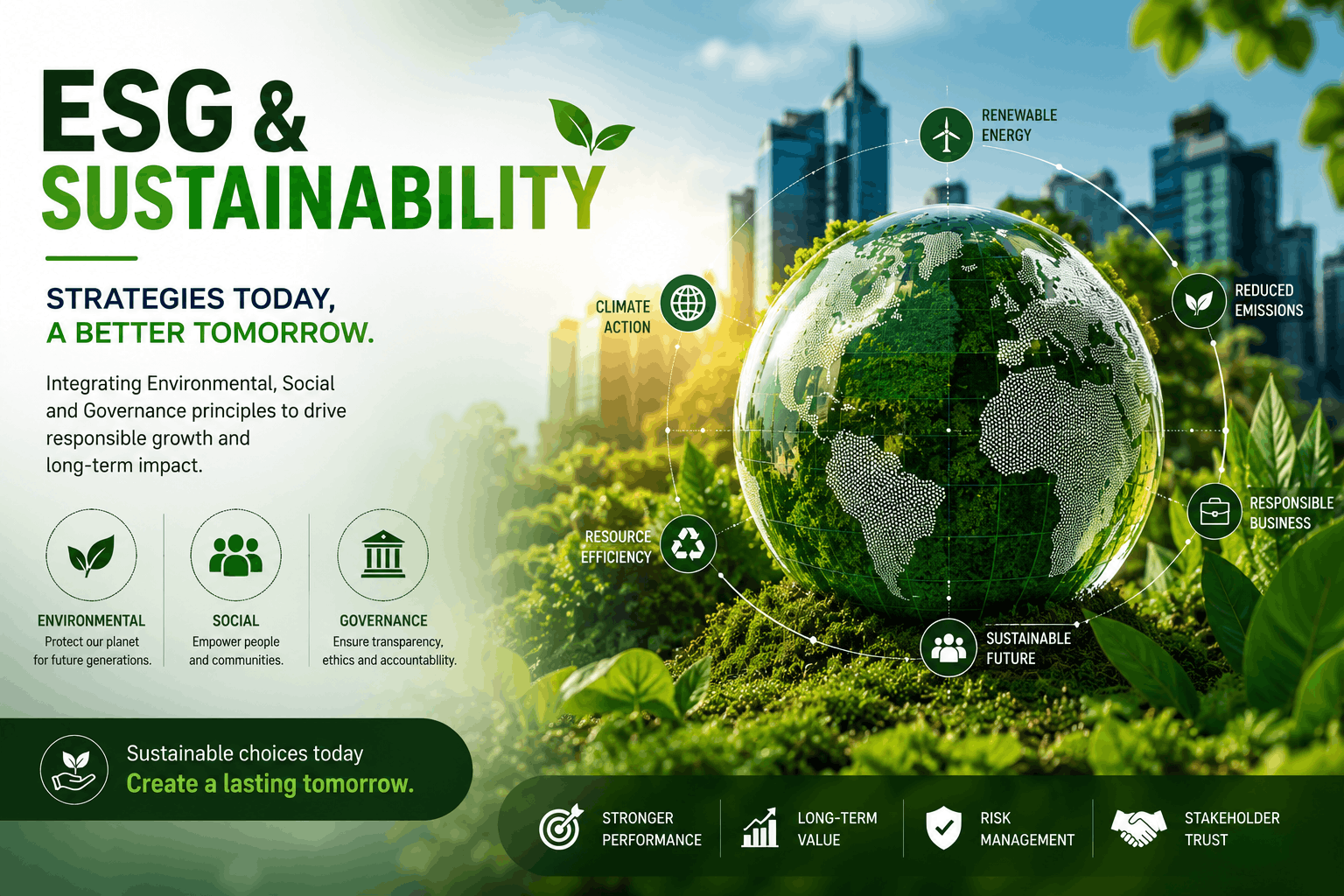
What is meant by ESG?
ESG refers to:
Environmental: This deals with the means that an organisation uses in the management of its ecological effects. Crucial sector is climate change and includes carbon footprint, energy consumption, waste management, water consumption, and environmental protection.
Social: The social part of ESG is aimed at revealing the relationship existing between an organisation and people. Among the significant aspects would be employee wellbeing and the issues of diversifying the staff, balancing the possible ways of putting people together in corporations.
Governance: Governance is about how the organisation is managed and controlled. This means that it involves such aspects, as board structure, ethical business practices, transparency, compliance, accountability, and risk management policies.
At present ESG is being applied in different areas of production, including finance, consulting, manufacturing, information technologies, energy, construction and many matters.
Why are ESG skills in demand?
The demand for professionals who understand and can operate with sustainability-related issues is increasing. ESG issues can dictate investment decisions, corporate reputation, stakeholder trust, corporate strategy, legal requirements, and long-term success of the company.
Because of that businesses need people who are able to deal with:
- ESG principles and frameworks
- Corporate sustainability strategy
- ESG reports and disclosures
- Issues of carbon and climate change
- Materiality and expectations of stakeholders
- ESG data and performance measurement
- Corporate governance structures
- Sustainable business practices
- Risk assessment
- Principles of responsible investments
The ESG certification program lays out the framework for acquiring these competencies.
Is Getting an ESG Certificate Really Beneficial?
For most professionals, yes, an ESG certification will prove beneficial. Still, a certificate alone may not bring you the expected job or promotion.
Knowledge is valuable when it is combined with the skills, experience, knowledge of the sector, and understanding of how ESG can be implemented in real business situations.
Achieving an ESG certification may be essential for someone who wishes to:
- Move into ESG or sustainability
- Change their specialization to ESG
- Introduce sustainability aspect into their current role
- Improve knowledge about ESG reporting
- Start working with customers or projects in the field of ESG
- Obtain credibility in the new field
- Comprehend how ESG influences the processes of doing business and making investments
One of the examples of the professionals who may find the knowledge in the sphere of ESG useful is HR, finance, compliance, risk, consulting, environmental management, operations, and business management specialists.
The Importance of ESG Certification for Your Career
1. It Provides You with Specialized Knowledge
ESG is a comprehensive concept and with self-learning one might find it difficult to determine where to start understanding the subject or which concept to focus on.
With the help of structured educational programs learners can acquire knowledge systematically.
Depending on the program a learner may get familiar with ESG basics, sustainability, reporting, governance, social responsibility, climate issues, etc.
This organized learning will be beneficial for those who are starting their career.
2. It Can Help You Change Your Career Path
A large number of people who are interested in ESG do not have any traditional education or experience in sustainability.
For example, a finance expert is interested in sustainable investments or HR professional would like to learn more about social aspects of ESG or a compliance officer would like to understand governance or ESG-related reporting.
In these cases having an ESG certificate will show that the person has taken steps in gaining useful knowledge.
3. ESG Information Can Enhance Skills
One of the major advantages associated with the education of ESG is that there is no need to give up your current profession.
Instead, you can add ESG knowledge to your skill set.
For example:
- Finance specialists can delve into ESG research and sustainable finance.
- HR specialists can learn about sustainability, society, human resource management, and human capital.
- Risk management specialists can find out about ESG risks.
- Business consultants can take sustainability into account.
- Directors can learn how to plan the development and growth of business in a responsible manner.
- Environmental professionals can link their knowledge to the implementation of ESG principles by corporations.
The combination of professional knowledge and ESG knowledge is advantageous, since the demand for specialists who possess knowledge in both the area of the industry and sustainability is high.
Which Careers Can ESG Certifications Help You Pursue?
It must be pointed out that the specific job outcome is likely to depend on factors such as the individual's educational qualifications, work experience, the place of residence, relevant skills, and requirements specified by the employer. ESG knowledge can be useful in obtaining the following jobs:
- ESG Analyst
- Sustainability Analyst
- ESG Consultant
- Sustainability Consultant
- ESG Reporting Expert
- Corporate Sustainability Associate
- ESG Risk Analyst
- Responsible Investment Analyst
- Sustainability Manager
- ESG Research Analyst
- Climate and Sustainability Associate
- Governance and Compliance Specialist
Certain jobs may require obtaining additional qualifications or gaining some experience in the relevant field. Therefore, certification can be considered as a step in the development of the career rather than the guaranteed means of obtaining a job.
Selecting the Appropriate ESG Accreditation
Not all ESG courses are created equal. Before you decide to sign up, consider various factors listed below.
Course Curriculum
Check what courses cover. Your course should meet your professional aspirations and include ESG topics that are relevant.
Practical Relevance
Look for information that helps you to see how ESG is implemented.
Faculty and the Learning Experience
Pay attention to the caliber of the instructors, the teaching style, case studies, exercises, and the opportunities the course offers to acquire practical knowledge.
Your Career Objective
A student in search of fundamental knowledge of ESG may require a different program than someone already experienced in the field of finance or sustainability.
Before making a choice about a certification program, ask yourself: What do I want to do, having this knowledge?
Learning ESG at eAsia Academy
For the business professional and students seeking to gain knowledge about ESG and sustainability, eAsia Academy offers various learning techniques to help the students understand critical concepts related to Environmental, Social and Governance practice.
A good ESG learning experience requires more than just memorizing definitions obtained in the course. Learners need to learn how ESG relates to business strategy, sustainability, decision-making, reporting, risks and expectations of stakeholders.
At eAsia Academy, the focus is on helping learners to acquire useful knowledge that will help them understand the role of ESG in today’s business world.
Whether you are a student considering future career paths or a professional wanting to broaden your expertise, gaining knowledge of ESG will guide you in adapting to new corporate demands and opportunities.
Is pursuing an ESG certification suitable for you?
If you have a sincere interest in sustainability and responsible business, obtaining an ESG certification can be a suitable decision.
It fits perfectly in the case of:
- Students defining their career path
- Professionals looking for improvement
- Experts wishing to switch their job roles
- Specialists from the finance and investing sectors
- Human resources and people management experts
- Professionals working with compliance and risk management
- Consultants and business professionals
- Environmental and sustainability specialists
Before enrolling make sure that the program is in accordance with your goals. If you plan to become better educated in the field, get ESG knowledge as a qualification, understand business issues regarding sustainable development, or get ready for job opportunities in the area of ESG, a good certificate will get you what you want.
certificate will get you what you want.
Closing Notes
Are certifications in ESG really valuable for building a career?
For some professionals the answer is yes. However, it all depends on how you make use of knowledge you acquire.
An ESG certification can be beneficial if you acquire practical knowledge and improve your current skills and gain preparation for career opportunities. It is also necessary to keep learning and know what is happening in the industry.
With increasing relevance of sustainability, competence in ESG is likely to become an increasingly useful addition to any professional’s resume.
If you want to learn more about ESG, sustainability, and how they relate to doing business today, getting to know an ESG program at eAsia Academy might be a useful step for you to take.
FAQs
The value of an ESG certificate depends on how it matches your career objectives and whether it helps grow your knowledge. It can enable you to acquire valuable expertise in sustainability and ESG, and corporate subjects.
A certificate does not guarantee getting a job. Various factors such as your qualifications, work experience, and location can have more significance in finding employment. However, having ESG knowledge gives you a better chance of being employed in corresponding positions.
A certificate, besides those mentioned above, can be beneficial to human resources experts, consultants, and compliance managers, depending on their individual career goals.
Having ESG knowledge can open up new jobs connected to sustainability, ESG analysis, consulting, reporting, and responsible investment.
A career in ESG can be viewed as very promising because businesses are putting more emphasis on sustainability.