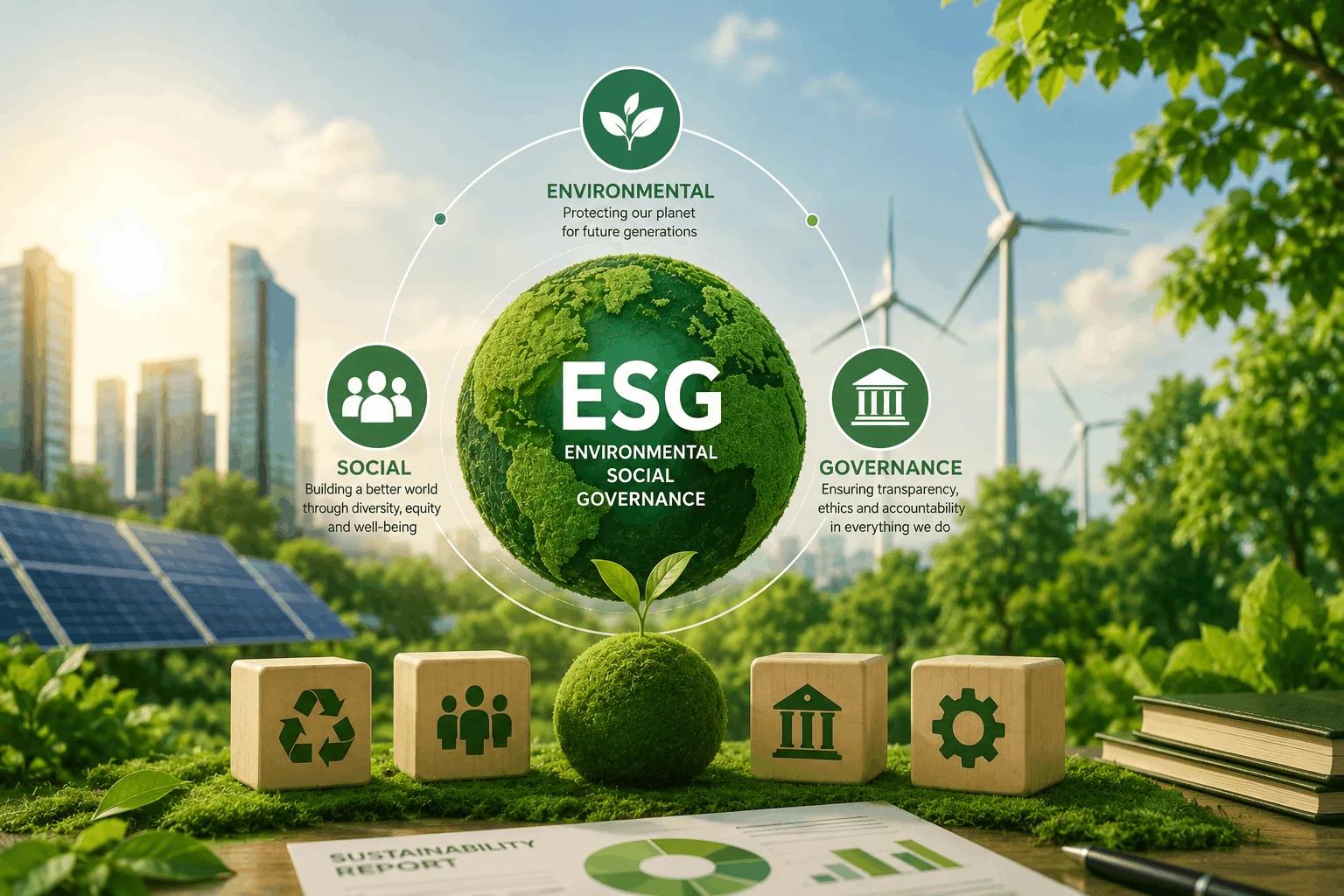
Green Jobs in India: Career Opportunities in Sustainability
India is undergoing a major transformation as businesses, governments and industries increasingly focus on sustainability, climate action and responsible growth. This shift is creating a new category of employment opportunities commonly known as green jobs.
Green jobs are no longer limited to traditional environmental roles. Today, professionals can build careers in ESG, sustainability management, carbon accounting, renewable energy, environmental compliance, climate risk, sustainable finance, waste management and corporate sustainability.
For students, working professionals and people looking to switch careers, the growing demand for sustainability expertise presents an important opportunity. Companies need professionals who understand not only environmental issues but also how sustainability can be integrated into business strategy.
So, what are green jobs, what career opportunities are available in India, and what skills do professionals need to enter this growing field?
What Are Green Jobs?
Green jobs refer to those which help towards sustainability, resource efficiency, climate actions or towards achieving the goal of having a low carbon economy.
Such roles might include reducing carbon emissions, natural resource management, energy efficiency measures, sustainable business practices or achieving ESG objectives.
For instance, a firm might require an ESG expert for sustainability reporting, a carbon expert for measuring carbon emissions or a sustainability manager for environmental strategies.
What is critical here is that green jobs are not only limited to environmental sciences. People from management, financial, engineering, HR, commerce, data analytics and other fields can also participate in green jobs provided that they acquire relevant sustainability knowledge and skills.
Why Are Green Jobs Growing in India?
India's focus on sustainable development is increasing the demand for professionals with knowledge of environmental and ESG practices.
Businesses are facing growing expectations from customers, investors, regulators and other stakeholders to become more transparent about their environmental and social impact. Large organizations are also increasingly integrating sustainability into their business strategies and reporting processes.
This creates demand for professionals who can collect and analyze sustainability data, prepare reports, manage environmental initiatives, understand carbon emissions and support ESG decision-making.
The growth of renewable energy, electric mobility, sustainable finance, circular economy initiatives and carbon markets is also creating new career paths.
As organizations continue adapting to these changes, green skills can become an important advantage for professionals seeking long-term career growth.
Top Green Career Opportunities in India
1. ESG Professional
ESG is one of the fastest-growing areas within the sustainability sector. ESG professionals help organizations understand and manage their environmental, social and governance performance.
Their responsibilities may include ESG data collection, sustainability reporting, stakeholder communication, risk assessment and supporting ESG strategies.
Professionals with knowledge of ESG frameworks, reporting standards and sustainability concepts can explore opportunities across consulting firms, financial institutions, corporations and specialized sustainability organizations.
2. Chief Sustainability Officer
A chief sustainability officer assists companies in the creation of sustainability policies.
A chief sustainability officer's job can involve managing waste, policy formation and project coordination.
This career path is likely to suit people who have a background in environmental management, business management or corporate strategy.
3. Carbon Management Expert
As companies attempt to understand and manage their carbon footprints, carbon management has grown in importance.
Carbon professionals may be involved in estimating carbon footprints, collecting emissions data, developing reduction strategies, accounting for carbon, and working on a variety of climate-related tasks.
A background in carbon management and reporting can lead to many career paths in the field of sustainability consulting and corporate sustainability groups.
4. Sustainability Consultant
Sustainability consultants assist firms in identifying and formulating sustainable solutions to environmental and sustainability issues.
Consultants may assist firms in developing ESG policies, sustainability reports, environmental performance and carbon reduction measures, among other areas.
Consulting offers a very good career opportunity for those who love research, analysis and communication.
5. ESG and Sustainability Analyst
Organizations increasingly require professionals who can collect, organize and analyze sustainability-related information.
An ESG or sustainability analyst may work with environmental data, ESG metrics, sustainability reports and business performance indicators.
Professionals with a combination of data analytics and sustainability knowledge can develop a valuable profile for this type of role.
6. Environmental Compliance Professional
An environmental compliance specialist is an individual who guides companies in understanding and adhering to the relevant environmental regulations.
Among their responsibilities are evaluation of environmental performance, documentation of activities and preparing for audits.
Professionals in this area can be offered various job opportunities in the field, such as positions in environmental biology, engineering and science.
Skills Needed for Green Jobs
Entering the sustainability sector requires more than simply knowing environmental terminology. Employers increasingly look for professionals who can combine sustainability knowledge with practical business and analytical skills.
Some important green skills include understanding ESG principles, sustainability reporting, carbon accounting, environmental management and climate-related risks.
Data analysis is also becoming valuable because sustainability teams need to measure emissions, track performance and interpret large amounts of information.
Communication and presentation skills are equally important. Sustainability professionals often need to explain complex environmental information to management, employees, investors and other stakeholders.
Professionals who combine technical sustainability knowledge with business, analytical and communication skills can position themselves strongly for emerging green career opportunities.
Can Professionals from Non-Environmental Backgrounds Enter Green Careers?
Yes. The sustainability sector is becoming increasingly interdisciplinary.
A finance professional can move toward sustainable finance or ESG analysis. An HR professional can explore social sustainability and responsible workplace practices. A business management professional can move into sustainability strategy. Data professionals can work with ESG data and sustainability analytics.
It follows, therefore, that professionals do not have to necessarily restart their entire careers. Rather, they can create expertise in sustainability on the basis of their already acquired professional expertise.
Professional certification and/or specialization may be a practical option for many career-switching professionals to learn about the basics and gain relevant industry skills.
How to Start a Career in Sustainability
The first step is to understand which area of sustainability interests you most. ESG, carbon management, sustainability strategy, environmental compliance and sustainable finance are different career paths and may require different skills.
Next, develop a strong understanding of sustainability concepts and relevant industry practices. Learning through a structured professional course can help organize this knowledge and provide a clearer career direction.
It is also useful to follow sustainability developments, read ESG and climate-related reports, understand industry terminology and become familiar with the types of work performed by sustainability professionals.
Practical knowledge is especially valuable. Instead of only learning definitions, professionals should understand how sustainability concepts are applied within real businesses.
You can also explore more career-focused learning resources through the eAsia Academy blog to continue building your knowledge.
The Future of Green Jobs in India
The future of green employment in India is closely connected to the country's transition toward a more sustainable and resource-efficient economy.
As companies integrate sustainability into business decisions, the demand for people with ESG, carbon management and sustainability expertise is likely to continue expanding.
Green careers can therefore provide opportunities not only for fresh graduates but also for working professionals who want to develop new skills or transition into emerging career fields.
The most valuable professionals will increasingly be those who understand sustainability while also knowing how to connect it with business objectives, data, risk management and organizational performance.
Conclusion
Green jobs in India are becoming an important part of the future of work. From ESG and sustainability management to carbon accounting and environmental compliance, professionals now have multiple career paths to explore.
The sustainability sector is also becoming more inclusive of professionals from different educational and professional backgrounds. With the right combination of sustainability knowledge, technical skills and business understanding, professionals can prepare themselves for emerging opportunities.
If you are considering a career in sustainability, ESG or related fields, now is a good time to start developing the skills that organizations increasingly need.
FAQs
Green jobs are careers that contribute directly or indirectly to environmental sustainability, climate action, resource efficiency or the transition toward a low-carbon economy. Examples include ESG professionals, sustainability managers, carbon specialists and environmental compliance professionals.
Some growing green career options include ESG professional, sustainability manager, sustainability consultant, carbon management professional, ESG analyst and environmental compliance specialist. The right career depends on your education, existing skills and area of interest.
Yes. Sustainability is an interdisciplinary field. Professionals from management, finance, engineering, HR, commerce, data analytics and other backgrounds can develop sustainability expertise and explore relevant career opportunities.
ESG professionals can benefit from knowledge of ESG principles, sustainability reporting, environmental issues, data analysis, risk management and corporate sustainability. Strong communication and analytical skills are also valuable.
ESG can be a promising career area because organizations are increasingly focusing on sustainability, responsible business practices, risk management and ESG-related information. Professionals with relevant skills can explore opportunities across multiple industries.