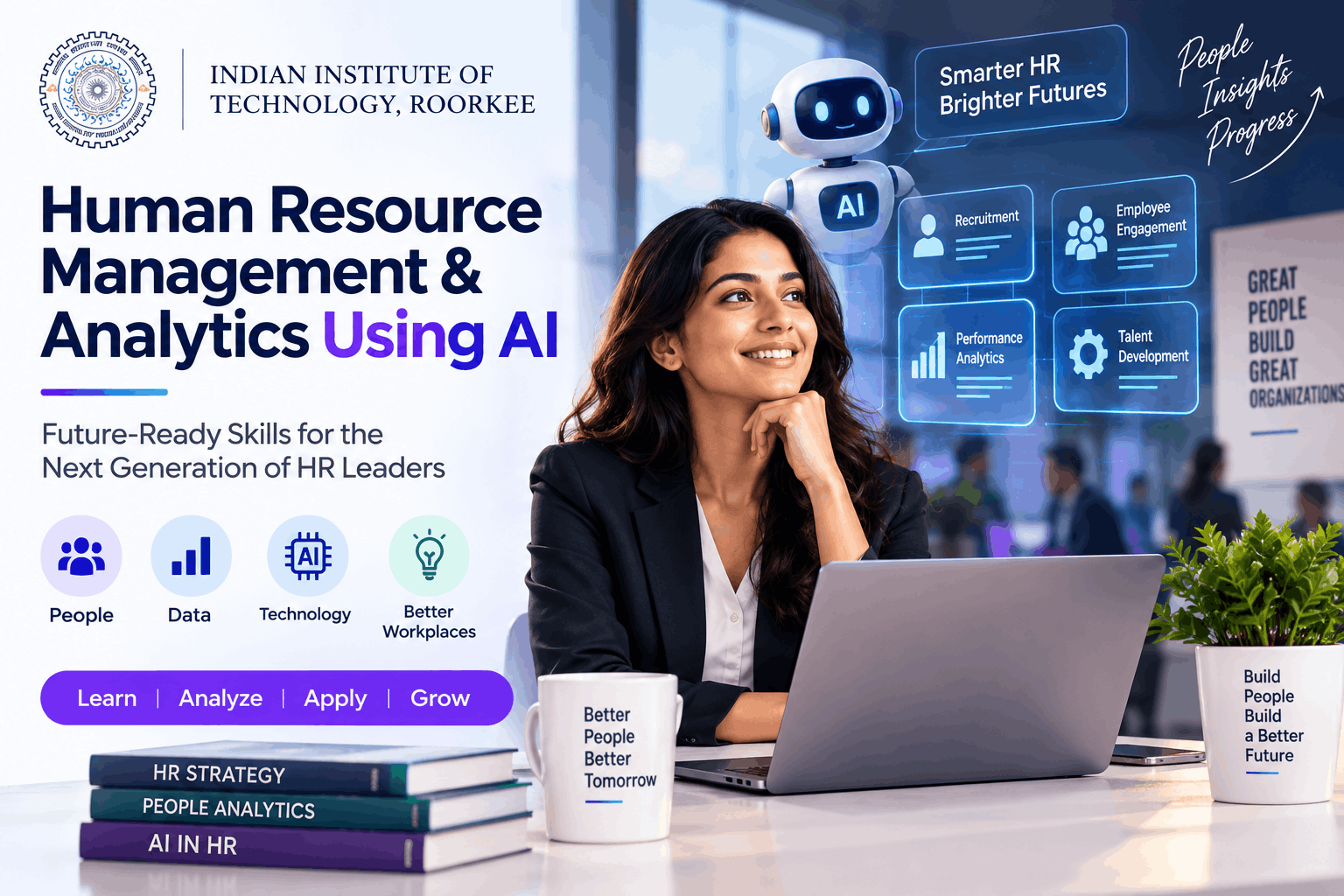
The The Role of Artificial Intelligence in Recruitment | AI in HR
Recruitment is a predominant task in Human Resource Management. It usually involves a process that is not only time-consuming but requires lots of financial and human resources. Organizations want to attract the best candidates for the job and have to deal with competition between other organizations providing jobs.
Artificial Intelligence technology can be used to automate ordinary tasks, search for appropriate workers, analyze recruitment information, etc. However, it works best when it is used as an auxiliary to recruiting specialists rather than replacing them altogether.
Specialists in Human Resource Management should be aware of the latest trends in recruitment so as to gain necessary knowledge on the topic.
What is AI in recruitment?
Artificial Intelligence in recruitment is defined as the introduction in the hiring process of technologies such as AI, machine learning, natural language processing, and similar technologies.
In recruitment, technology can come in handy during candidate sourcing, resume screening, job advertising, interview preparation, candidate communication, and recruitment analytics. The AI in recruitment guide of the government defines technology applications in sourcing, screening, interviewing, and selection.
This allows recruiters not only to use traditional recruitment tools but also to deploy AI-powered systems and automate the processing of a vast amount of information in order to identify some patterns that are not observable without AI usage.
How Artificial Intelligence is Transforming the Hiring Process
Artificial Intelligence assists in nearly every recruitment process. Here are some ways in which it is applied:
1. The Process of Creating a Database of Candidates through Artificial Intelligence
Identifying candidates for multiple job vacancies can be rather challenging especially for large enterprises.
AI recruitment tools come in handy as they can identify potential job candidates according to their job skills, qualifications and other necessary criteria. Thus, this saves recruiters the time searching for candidates.
2. The Process of Screening Resumes
When the application of a certain position receives hundreds of applications, screening them is rather complicated.
Various AI screening platforms allow recruiters to organize all the applications and select resumes which meet a list of criteria.
At the same time, it is important for recruiters to review the criteria for screening as biased systems may help to reproduce bias from the very beginning.
3. Job Description Development
Generative AI technology can aid the HR personnel in preparing or enhancing the job descriptions. Recruiters can solicit the information regarding the position, duties, required qualifications, and expertise, and the AI-based system will create a proper outline.
However, the final version should be reviewed by humans so as to confirm that the job posting is accurate and appropriate.
4. Communication with Applicants
AI-supported bots and virtual helpers can respond to the frequently asked questions of candidates, provide them with information about job openings, and assist with the scheduling of interviews.
For instance, a recruitment bot can explain the procedure of applying for a vacant position or provide the information about the interviews’ timing. This will make communications faster and allow recruiters to concentrate on more challenging tasks.
5. Support for interviews
In the process of conducting interviews technology can be utilized in a variety of ways such as scheduling appointments, generating questions, making transcripts, and creating a systematic template.
However, companies should be careful when applying AI technologies in assessing candidates during interviews because such automations can lead to discrimination or lack of equal opportunity and accessibility if implemented poorly.
6. Analytics of recruitment
The opportunity to analyze recruiting data is one of the key advantages of integrating AI with HR analytics.
Companies can track indicators such as:
- Recruitment cycle duration
- Cost for recruitment
- The origin of candidates
- The proportion of applications and interviews
- The proportion of interviews and offers
- Acceptance rate
- Efficiency of recruitment funnel
- Candidate’s experience
This information can give HR insights into the problems and assist in improving recruitment practices.
Advantages of AI in Recruitment
If appropriately used AI has many positive sides for recruitment purposes.
Faster Hiring
Automation makes it possible to speed up the hiring process through elimination of monotonous tasks.
Better Scalability
Artificial Intelligence technology enables handling the bulk of applications and recruitment data in case of large-scale hiring.
Data-Driven Recruitment
Recruitment analytics means using measurable data and statistics instead of relying solely on gut feelings.
Better Candidate Experience
Automation provides better communication and scheduling for candidates during recruitment.
Less Work
With AI helping recruiters with resume organization, communication with candidates, and scheduling, the time spent on professional networking is increased.
Difficulties of Implementing AI in Recruitment
AI recruitment brings with it various limitations. For example, artificial intelligence does not ensure accurate or fair decision-making when hiring.
Bias and Discrimination
AI systems can reflect trends that are present in the data used to build or run them. AI could therefore enhance any bias that is part of the recruitment data used.
Responsible AI guidance mentions possible issues like existing bias, online exclusion, and ads or targeting that could be discriminatory.
Lack of clarity
Some AI systems can make suggestions that the users of the system cannot understand. Human resources should have enough knowledge regarding the way the system works, what data it uses, and its possible limitations.
Privacy and protection of data
Recruiting process is associated with dealing with private information of candidates.
Accessibility
Recruitment technology should not make it harder for candidates with disabilities to apply. For example, U.S. employment guidance warns that algorithmic tools can exclude people with disabilities and highlights the need for reasonable accommodation.
Over-Reliance on Technology
AI should assist recruitment decisions rather than be the only decision-maker. It is important to have human supervision, especially for major employment decisions.
AI Should Aid Recruiters and Not Take Their Place
The future of hiring will likely be a partnership between humans and AI. While AI is capable of quickly processing information, performing repetitive tasks, and recognizing patterns in recruitment data, people are able to demonstrate communication skills, emotional intelligence, contextual understanding, ethical judgment, and the ability to build rapport.
Thus, effective recruitment strategy should utilize both the efficiency of AI and the wisdom of the human mind.
In addition, companies should define proper governance models and norms for AI usage, assess key AI tools, track results of their utilization, create reports on gaps, and identify risks.
Important skills for HR professionals in AI era
With technology reshaping recruitment, HR professionals must acquire new skills apart from traditional recruitment skills.
Some of the key skills are:
- Human Resource Management
- HR analytics
- Data interpretation
- Basic knowledge about AI
- Usage of recruitment technology
- Workforce analytics
- Critical thinking
- Data privacy education
- Knowledge of ethical AI
- Communication skills and interpersonal skills
Gaining knowledge about AI, analytics and HR together can help professionals be more efficient in technology-driven HR.
Future of AI in Recruiting
The introduction of Artificial Intelligence has revolutionized recruitment practices of organizations. Companies can use AI for various human resource processes and tasks such as sourcing candidates, screening resumes, communicating with candidates, and monitoring hiring process.
However, it is important to guarantee that AI is used responsibly. Organizations should monitor their AI systems for dysfunctionalities, protect candidate data, and take care of accessibility issues.
For HR professionals, the goal isn’t just learning how to use AI tools, but knowing when and how to employ AI as well as combine AI with sound HR practices.
As the workplace becomes increasingly data-driven, professionals who understand Human Resource Management, HR Analytics, and Artificial Intelligence can position themselves to contribute more effectively to the future of recruitment.
FAQs
AI plays a role in multiple recruitment processes such as sourcing and analyzing candidates, creating jobs analysis and descriptions.
The use of AI allows for automating tasks that increase the efficiency of recruitment and create better communication.
AI can replace certain recruitment operations but, definitely, it cannot substitute for the need for real people with their judgment and decision-making abilities.
AI helps in speeding up recruitment processes, eliminating a lot of routine tasks, bringing valuable input into communication processes.
Potential dangers of AI implementation into recruitment are various biases, human rights abuse, invasion of privacy, and lack of transparency.