How to Start a Career in Sustainability and ESG in India
Sustainability and ESG (Environmental, Social, and Governance) have become important areas for businesses across industries. Companies are increasingly focusing on climate action, responsible business practices, sustainability reporting, resource efficiency, and stakeholder expectations.
This growing focus is also creating new career opportunities for professionals who understand ESG, sustainability, carbon management, climate strategy, and responsible business practices.
If you are wondering how to start a career in sustainability and ESG in India, this guide will help you understand the skills, career paths, and learning options you can consider.
What Is ESG and Sustainability?
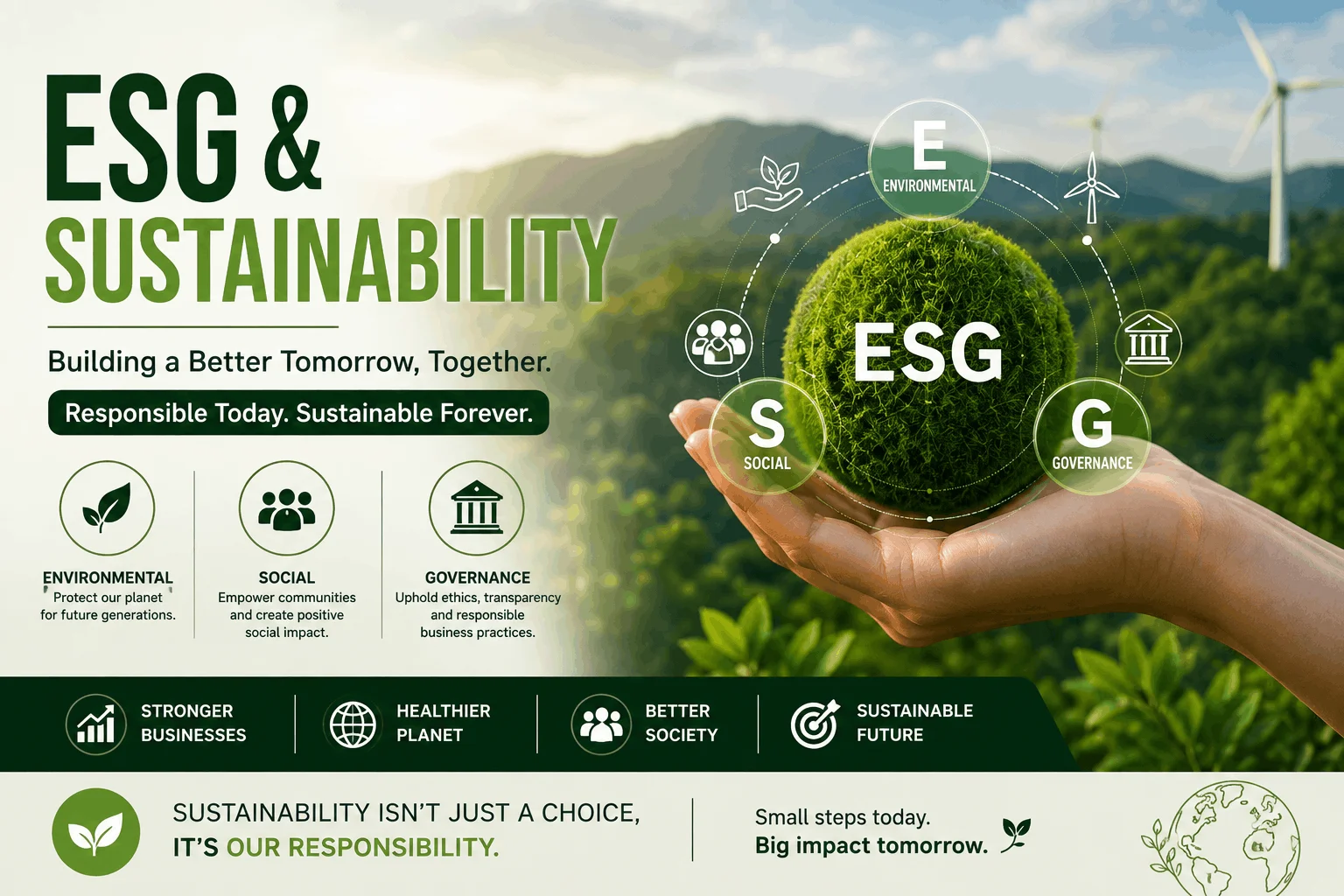
ESG stands for Environmental, Social, and Governance.
Environmental concerns include topics like climate change, greenhouse gases, energy, waste, water, and impact on the environment.
Social concerns include such topics like the well-being of employees, diversity, human rights, community impact, and responsibility of the supply chain.
Governance involves such concerns like business ethics, transparency, risk management, and corporate governance.
Sustainability is an extended term that takes into account creation of long-term value.
Why Are ESG Careers Growing in India?
Businesses are increasingly expected to understand and communicate their environmental and social impacts. Investors, customers, employees, regulators, and other stakeholders are also paying greater attention to responsible business practices.
As a result, organizations need professionals who can help with areas such as:
- ESG strategy
- Sustainability reporting
- Carbon management
- Climate-related initiatives
- ESG data and disclosures
- Sustainability consulting
- Responsible supply chains
- Corporate sustainability programs
This means ESG knowledge can be useful across multiple industries rather than being limited to environmental organizations.
Who Can Start a Career in ESG and Sustainability?
You do not necessarily need to come from a purely environmental background.
Professionals from finance, business management, engineering, environmental studies, consulting, HR, operations, law, and other fields can explore ESG and sustainability career paths.
Working professionals can also build ESG knowledge alongside their existing professional experience.
For example, a finance professional may explore sustainable finance, while an operations professional may focus on resource efficiency or sustainable supply chains.
What Skills Do You Need?
A career in ESG needs a mix of industry experience, analysis skills, communication skills, and understanding of sustainability and business practices.
Some important areas that you can work on include:
1. ESG Basics
It is important to know about the three aspects of ESG and their linkages to business.
2. Sustainability Reporting
This is the process through which organizations report sustainability-related information.
3. Carbon and Climate
It is important to know about greenhouse gases and carbon markets if you are a professional in this field.
4. Analysis
Since ESG deals with environmental and business information, strong analytical skills may come handy.
5. Communication Skills
An ESG professional needs to communicate with various stakeholders including managers, employees, investors, clients etc.
What Are the Career Opportunities in ESG?
There isn’t one specific pathway into the world of ESG careers. It may depend on your background in education, professional experience, and specialization.
These may include:
ESG Analyst: ESG data, assessment, research, and reporting.
Sustainability Consultant: Helping organizations implement sustainability strategy and initiatives.
Sustainability Manager: Assisting in sustainability programs for organizations.
ESG Reporter: Working on the collection, analysis, and preparation of sustainability data.
Carbon Management Professional: Focusing on the calculation, reduction, and management of carbon emissions.
Sustainable Finance Professional: Understanding the impact of sustainability in finance and investments.
How Can You Start?
First, it is important to understand where ESG stands in relation to your current career.
Rather than attempt to learn everything at once, select an area that you are interested in based on your professional experience.
Afterwards, gain knowledge of the basics by taking an organized ESG or sustainability course. This can be done by obtaining a professional certification or course to gain an understanding of key concepts.
It is also important to keep abreast of all developments in sustainability, ESG, climate action, and corporate reporting. Practical assignments and case studies will also enable you to apply theory to practice.
Lastly, revise your CV and LinkedIn account to include ESG skills, projects, certifications, and sustainability experiences.
Is an ESG Certification Useful?
An ESG certification can help demonstrate that you have invested time in developing knowledge in the field. However, a certification should be considered alongside practical skills and professional experience.
The best approach is to combine ESG knowledge + industry experience + practical skills.
For working professionals, an ESG course can also be a way to add sustainability expertise to an existing career rather than completely changing professions.
Start Your ESG and Sustainability Journey
Change is occurring within the field of sustainability, and individuals with an understanding of how the environment, society, and governance relate to business can capitalize on this opportunity.
If you are a student, working individual, business manager, finance professional, or interested in entering the field of sustainability, ESG training may be worth your time.
eAsia Academy provides professional training courses that are focused on providing learning opportunities for individuals to learn about new areas like ESG, sustainability, and carbon markets.
FAQs
The first step to start your career in ESG in India is to have basic knowledge about ESG, learn about sustainability principles, acquire necessary skills and gain practical knowledge about ESG.
No, professionals belonging to various sectors including finance, management, engineering, consulting, operations, HR, among others, can also explore ESG.
Since sustainability is becoming increasingly significant in businesses, there are a number of opportunities for ESG and sustainability related roles.
Some of the important areas include basics of ESG, sustainability reporting, carbon and climate change, research, data analysis, and communication.
An ESG certification will help working professionals get structured knowledge in ESG and also show their interest in the area.