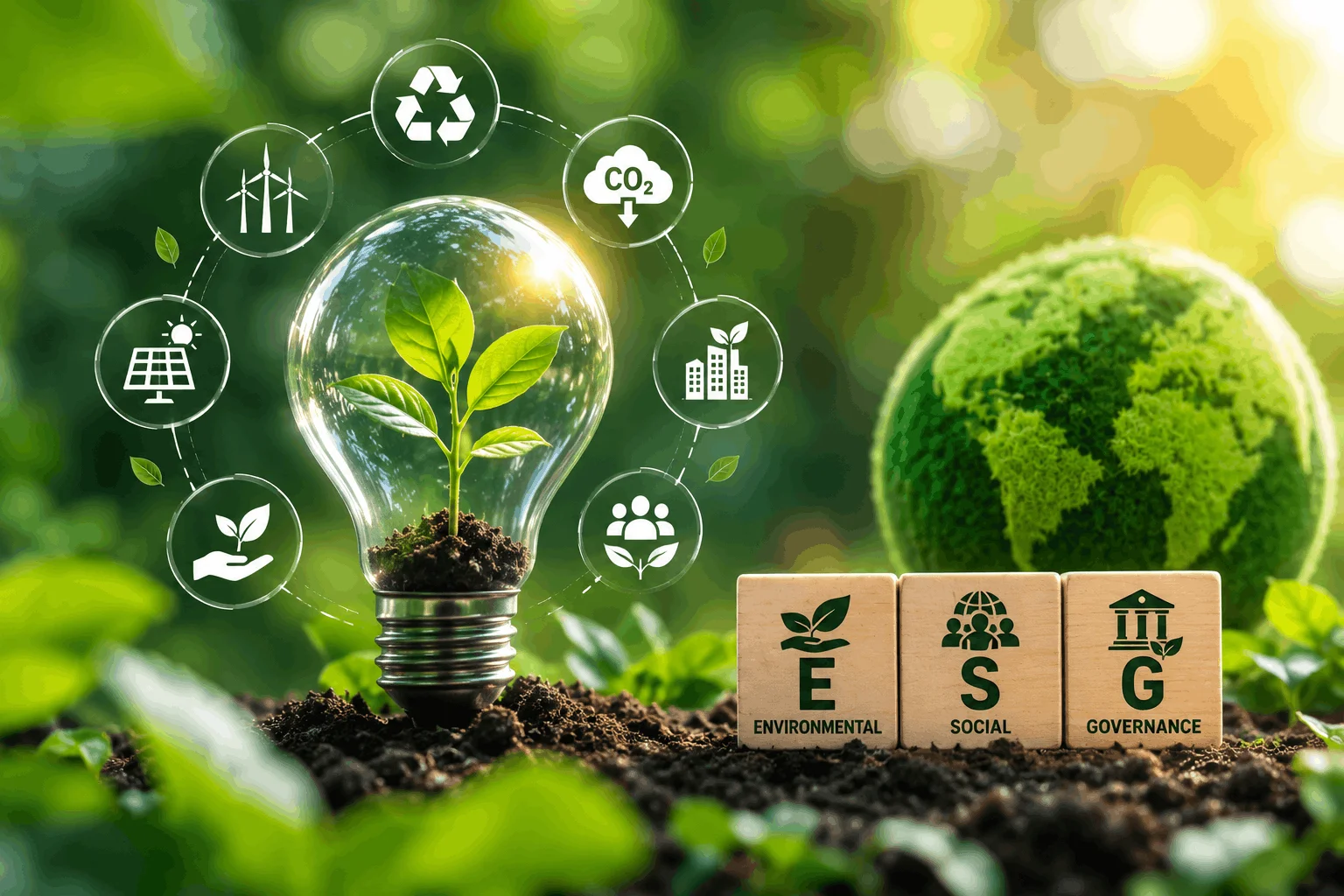
Sustainability Management: Skills You Need for a Future-Proof Career
It is no longer viewed as a CSR initiative because many organizations have begun to consider sustainable practices in their operations, planning, and decision-making, starting from reduction of carbon emissions up to resource efficiency and ESG risk management. The growing interest in this concept has resulted in sustainability management becoming an area of specialization which all students, professionals and businessmen need to pay attention to.
What are the skills one needs in order to build a career in sustainability management?
Here, we will discuss some of the basic skills of sustainability management that you will find useful in the future.
What Is Sustainability Management?
Sustainability management is the act of guiding the organization in balancing its obligations towards the environment, society, and economy while meeting its corporate goals.
These may include, but are not limited to, the following:
- Environmental management
- ESG strategy
- Carbon emissions management
- Sustainability practices
- Resources management
- Sustainability reporting
- Climatic risks management
- Corporate social responsibility
A sustainability manager should have knowledge of both the business and sustainability aspects.
Why Is Sustainability Management Becoming Important?
There is increasing pressure on businesses to lower their environmental footprint, mitigate climate change risk, and practice good corporate citizenship.
Customer, investor, employee, and other stakeholder expectations regarding these topics are increasing as well.
Therefore, businesses require individuals who can assist them to:
- Assess sustainability risk
- Create sustainability strategies
- Monitor environmental performance
- Mitigate carbon emissions
- Become more resource efficient
- Communicate sustainability performance
- Conduct ESG analysis in decision-making
This provides an opportunity for sustainability management professionals.
Seven Essential Sustainability Management Skills
1. Understanding ESG
Another crucial skill required of sustainability professionals is the ability to understand Environmental, Social, and Governance (ESG).
It is important to be familiar with the effect of environmental performance, social responsibility and governance on business strategy and risk.
Understanding ESG reporting, materiality and sustainability performance is a good starting point for your career as a sustainability professional.
2. Carbon Management and Emissions
Climate change and carbon emissions are important aspects of sustainability.
It is important for professionals in this area to know about things like Scope 1, Scope 2 and Scope 3 emissions.
Understanding carbon management, calculation of emissions and carbon reduction will enable you to find ways how organizations can reduce their negative effect on the environment.
Also, knowledge of carbon management is very useful for those who are interested in carbon credits.
3. Sustainability Reporting
The first thing that companies need to do is measure and report on their sustainability performance.
Sustainability reporting requires gathering of appropriate information, comprehending the metrics of sustainability and providing accurate representation of the data.
It is important for professionals to understand the disclosures of sustainability, ESG metrics and reporting frameworks.
Good reporting skills will be especially helpful for ESG analysts, sustainability consultants and sustainability teams.
4. Data Analysis
More and more often, sustainability is becoming data driven.
Companies must track factors including:
- Energy use
- Greenhouse gas emissions
- Waste production
- Water usage
- Employee metrics
- Sustainability goals
Thus, the skill of data analysis is a useful one.
There is no need for you to become a data scientist. But understanding how to work with spreadsheets, dashboards, metrics, and data will help you be more effective.
5. Strategic Thinking
Sustainability must not be separated from business strategy.
A professional in sustainability needs to comprehend the potential effect that environmental and social matters can have on costs, risks, operations, reputation, and growth.
Strategic thinking enables professionals to link sustainability objectives with the business results.
For instance, energy efficiency might result in emission reduction along with reduced operating costs.
6. Communication and Stakeholder Management
Sustainability experts typically deal with many different departments and stakeholders.
It is necessary to be able to communicate with:
- Top management
- Staff members
- Clients
- Investors
- Suppliers
- Regulators
- Consultants
The ability to articulate sustainability ideas in business terminology is thus highly beneficial.
Presentation, writing, and stakeholder management skills can be very useful for sustainability professionals.
7. Continuous Learning
Sustainability is an industry that is constantly evolving.
Emerging technologies, regulations, disclosure requirements, corporate processes and environmental issues keep cropping up.
Those individuals who continually educate themselves have the potential to stay ahead of the competition.
Gaining knowledge about ESG, carbon management, sustainability disclosures, and climate strategy can enable you to expand your professional competencies.
For Whom is Sustainability Management Suitable?
Sustainability management can apply to professionals of various educational and career profiles.
It can be helpful for:
- Students and graduates
- Environmental professionals
- ESG professionals
- Business managers
- Consultants
- Corporate professionals
- Entrepreneurs
- Compliance professionals
- HR professionals
- Professionals wanting to switch to sustainability
There is no obligation to enter the field of sustainability at the beginning of your professional career. Acquiring the necessary skills can help you get closer to sustainability in your chosen field.
Career Opportunities in Sustainability Management
With the integration of sustainability into business practices, individuals can pursue a variety of career options.
Some of the potential career opportunities include:
- Sustainability Analyst
- Sustainability Manager
- ESG Analyst
- ESG Consultant
- Sustainability Consultant
- Carbon Management Professional
- ESG Reporting Professional
- Climate Risk Analyst
- Corporate Sustainability Professional
The skills and experiences required may differ according to job and company.
How to Develop Your Sustainability Management Skills
One of the ways would be to acquire knowledge incrementally.
Learn about sustainability first and later acquire knowledge of ESG, carbon management and sustainability reporting.
Alternatively, one can enroll in a professional learning program to learn these subjects systematically.
If you want to acquire knowledge in ESG, Sustainability and Carbon Credits, you should check out these professional programs offered by eAsia Academy
Is Sustainability Management a Future-Proof Career?
It is not possible for any job to be fully secure in its status as being "future proof". Nevertheless, the importance of sustainability management has been increasing, as organizations need to react to environmental issues, new stakeholder demands, and new sustainability standards.
People who have knowledge of sustainability along with their business, analytical, communication, and strategic abilities can construct a better career portfolio.
It is not just about learning the theories of sustainability but learning how they can be used in business.
Conclusion
Sustainability management is increasingly becoming a key component of business strategy in today's world. With companies increasingly looking at ESG, carbon footprint reduction, responsible operation, and resilience, the demand for expertise in this field should persist.
Learning skills relating to ESG, carbon management, sustainability reporting, analytics, strategy, and communication will be useful for preparing yourself for a career in this promising field.
To learn more about sustainability, visit the related courses on offer from eAsia Academy.
FAQs
Important sustainability management skills include ESG knowledge, carbon management, sustainability reporting, data analysis, strategic thinking, communication and stakeholder management.
Sustainability management can be a strong career option for people interested in business, environmental responsibility and ESG. Organizations across industries are increasingly incorporating sustainability into their strategies and operations.
Students, graduates and professionals from environmental, business, finance, HR, compliance, consulting and other fields can become proficient in sustainability management.
ESG can help businesses assess and manage environmental, social and governance issues. So, knowledge about ESG can be an important aspect of sustainability management.
The requirements may differ depending on which position you apply for. Some positions might demand certain educational qualifications, while some others may not have such demands.