What Is ESG? Meaning, Full Form, Pillars and Real Examples
ESG is found in annual reports, newspaper headlines, and job postings. But what is ESG all about? This is an easy and jargon-free explanation, complete with examples from daily life and its application in India.
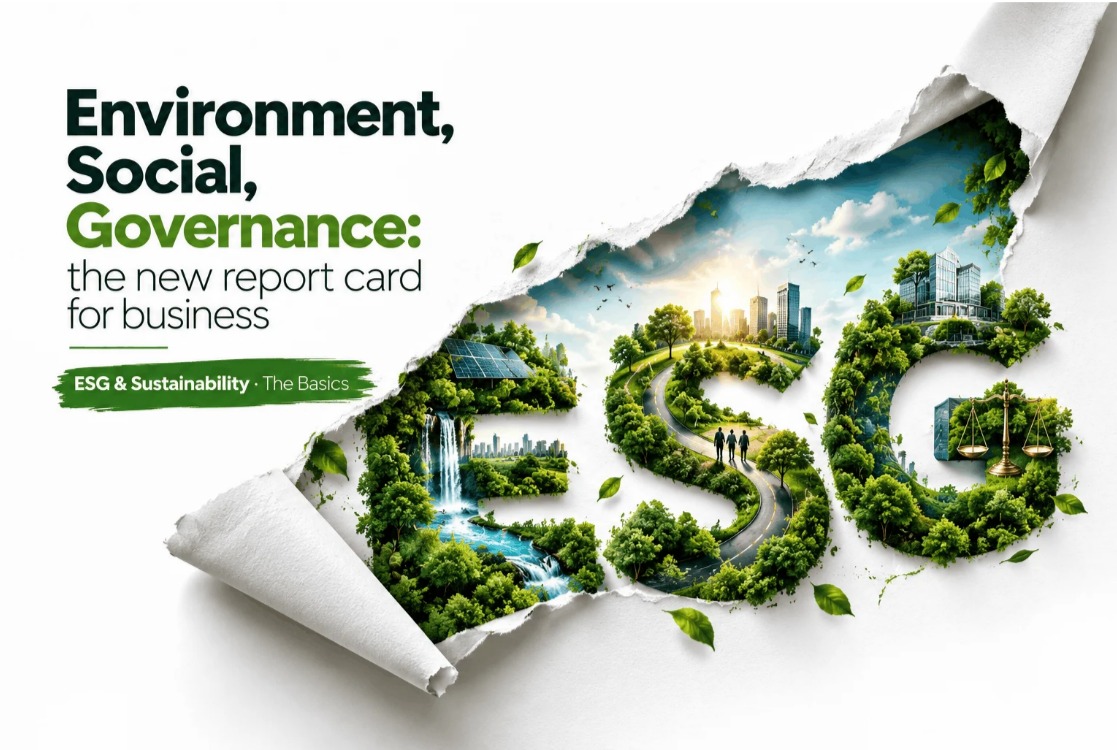
ESG stands for Environmental, Social and Governance.
ESG is data-oriented rather than intention-based.
ESG has a wider scope than CSR.
India follows the BRSR framework introduced by SEBI.
Some years back, the content of a company's annual report would focus mainly on revenue, profits, and dividends. Flip through an annual report today, and you will get pages of information about water consumption, women at work, independent boards, and carbon footprints.
That shift has a name: ESG.
In this guide, we will talk about what ESG is all about, its components, how it is different from CSR, and what it entails in India in layman's terms. There are many other guides on the eAsia Academy site that you can explore.
01What Is ESG? The Quick Version
ESG means Environment, Social, and Governance. It's an evaluation tool used to assess corporate responsibility: environmental impact, social impact, and ethical performance.
It's like the report card of the business world. One report card is about whether a company turns a profit. The other is about how the company turned the profit, and how it will be able to continue to do so without hitting any obstacles.
Two main differences between ESG and a mere sustainability concept are:
- It's measurable. Greenhouse gases in tons, water usage in kilolitres, employee turnover rate. Numbers, not words.
- It's objective. Investors, banks, rating agencies, regulatory authorities and big customers evaluate ESG reports.
02The Three Pillars of ESG, with Examples
Each letter covers a different set of issues.
The Three Pillars of ESG
E · Environmental
GHG emissions (Scope 1, 2, 3), energy use and renewables, water consumption, waste and circularity, biodiversity and land.
S · Social
Health and safety, fair wages and human rights, diversity and inclusion, training and retention, community impact.
G · Governance
Board independence, ethics and anti-corruption, transparent disclosures, data privacy, risk management.
E: Environmental
This is concerned with the environmental footprint of an organization in terms of greenhouse gas emissions, energy, water consumption, waste generation, and effects on land and biodiversity.
Example: A textile mill which changes from a coal-based boiler to a biomass or electric one and begins recycling the water used in the dyeing process.
Greenhouse gas emissions take the most prominent position among issues in this pillar. In case you want to find out more about their measurement, check our guide on Scope 1, 2 and 3 emissions, and for further actions – How carbon credits work.
S: Social
The social dimension is about people within and outside of the organization: safety of workers, compensation, diversity, training, human rights in the value chain, and impacts on communities.
Example: An IT firm that monitors the gender pay gap, provides appropriate parental leave and ensures its contractors pay the minimum wage.
A lot of this data is with the Human Resources (HR) department; hence people analytics is now overlapping with ESG. This connection is explained in HR analytics.
G: Governance
Governance encompasses how a firm is managed, namely board independence, remuneration policy for executives, ethics, anti-corruption policies, and whistleblowing policy.
Example: A publicly listed firm, which has independent board members, links the compensation of the CEO to environmental and safety performance.
Poor governance is often the source of ESG challenges. A company could produce an impressive report, but if there are no board-level individuals who can vouch for its figures, the report will be meaningless.
03ESG vs CSR vs Sustainability
These three terms get mixed up all the time. They're related, but not the same.
| Aspect | CSR | Sustainability | ESG |
|---|---|---|---|
| What it is | Spending on social causes | A long-term goal and mindset | A measurement and disclosure system |
| Main question | What good are we funding? | Can we operate without harming the future? | How well are we managing E, S and G risks, in numbers? |
| Main audience | Communities, regulators | Everyone | Investors, lenders, regulators, large customers |
| In India | Section 135, Companies Act 2013 | Broad corporate commitment | SEBI BRSR for listed companies |
An easy way to remember it: sustainability is the goal, ESG is how you measure progress, and CSR is one part of the social picture.
04Why ESG Matters
ESG didn’t get important overnight because firms became charitable. It became relevant when capital and regulations began to align.
- Capital: Investors perform ESG screening of companies before investing money.
- Credit: Increasingly, banks factor in climate and governance risks while giving loans.
- Regulation: SEBI makes ESG reporting mandatory for large companies listed on stock exchanges.
- Exporters: International buyers seek environmental and labour information from exporters.
Also, there’s a people factor. Many younger employees consider corporate principles before accepting any job offer. With the country’s commitment towards net zero by 2070, more and more pressure is expected on industries.
"ESG made sustainability numbers. And where there are numbers, there must be measurement, monitoring and explanation."
Want to Go Beyond the Basics?
The Professional Certificate Program in ESG & Sustainability Reporting, delivered with IIT Roorkee's Continuing Education Centre, teaches you how ESG reports are actually built, from BRSR to GRI and ISSB. Batch 3 starts November 2026, with weekend classes. eAsia is committed to a green future.
05How Does ESG Work in India?
The principal ESG framework in India is SEBI's Business Responsibility and Sustainability Report (BRSR).
- What firms file it: Largest 1,000 listed Indian companies by market capitalisation, as part of their annual report.
- What it is based on: Nine principles of responsible business conduct, including ethics, products, employees, stakeholders, human rights, environment, public policy, inclusive growth and customers.
- BRSR Core: Selected important indicators, like emissions, water, energy, waste and gender diversity, requiring independent assurance, phased in.
Indian firms use several other international frameworks. The most popular framework is GRI, explained on our GRI Standards Guide page. Others are: ISSB (IFRS S1 and S2) framework for investors and UN Sustainable Development Goals, which almost all firms align with.
There is also a compliance carbon market in India, for heavy industries. It is the Carbon Credit Trading Scheme, where the "E" of ESG is tied to targets and trading. We have a separate page explaining India's carbon credits program.
06Poor Practice of ESG: Greenwashing
Greenwashing refers to a situation whereby a company attempts to portray itself as being more sustainable than it actually is. The indicators of greenwashing include:
- Vagueness: Usage of words such as "eco-friendly" and "green" without supporting data.
- Cherry-picking: Focusing on one good figure and ignoring others; for example, talking about solar panels fitted on office roofs while forgetting about emissions from the supply chain.
- Targets without action: Talking about reaching net zero emissions by 2040 but having no plan to achieve the goal.
This is precisely what makes ESG data-driven and framework-based.
07Where to Go from Here
If this guide has sparked your interest, here are some next reads from our blog:
- GRI Standards Explained: How the world's most-used ESG framework works.
- Best ESG Certification Courses in India: If you're thinking about an ESG career.
- Why MBA Students Are Choosing ESG Careers: How ESG fits with business education.
- Best Carbon Credit Course in India: For the climate and carbon side of ESG.
And if you'd like structured, hands-on learning, the ESG & Sustainability Reporting program with IIT Roorkee is a good place to start. You can also browse all eAsia Academy courses.
FAQs
ESG stands for Environmental, Social and Governance. It is a way of judging how responsibly a company runs its business, beyond its profits.
A factory that cuts its emissions by switching to solar power is an environmental example. A company that improves worker safety and pays fair wages is a social example. A board with independent directors and a strong anti-bribery policy is a governance example.
CSR is mainly about a company spending on social causes, which in India is governed by Section 135 of the Companies Act, 2013. ESG is broader. It measures how a company manages environmental, social and governance risks across its whole business, using data that investors and regulators can check.
ESG disclosure is mandatory for India's top 1,000 listed companies by market capitalisation through SEBI's Business Responsibility and Sustainability Report (BRSR). Other companies are not required to report, but many are asked for ESG data by large customers, lenders and global buyers.
ESG helps stakeholders assess risk. Those companies which have managed their environmental footprint, treat their people well, and govern themselves in an honest manner are less likely to experience disruptions, have more funding, and retain talent.